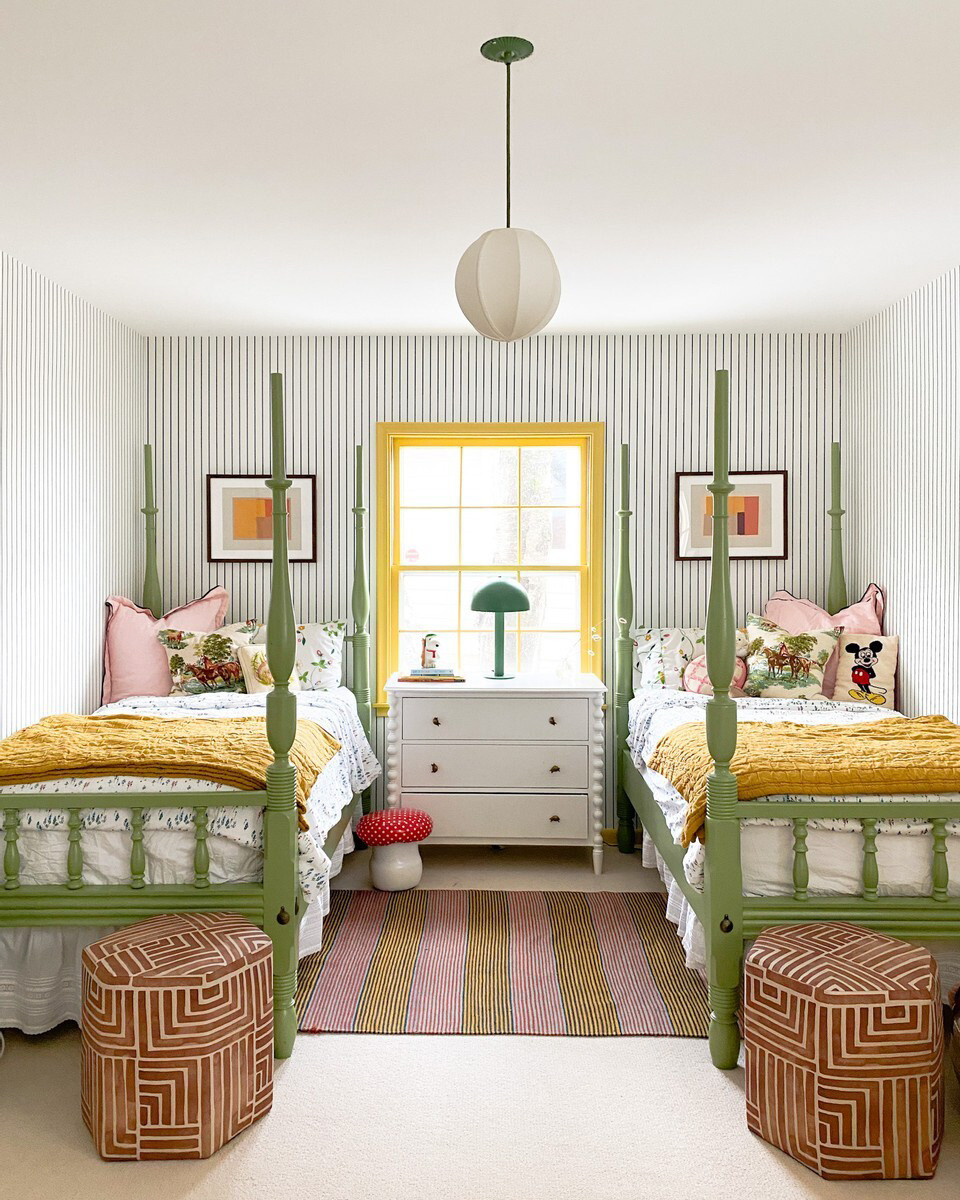
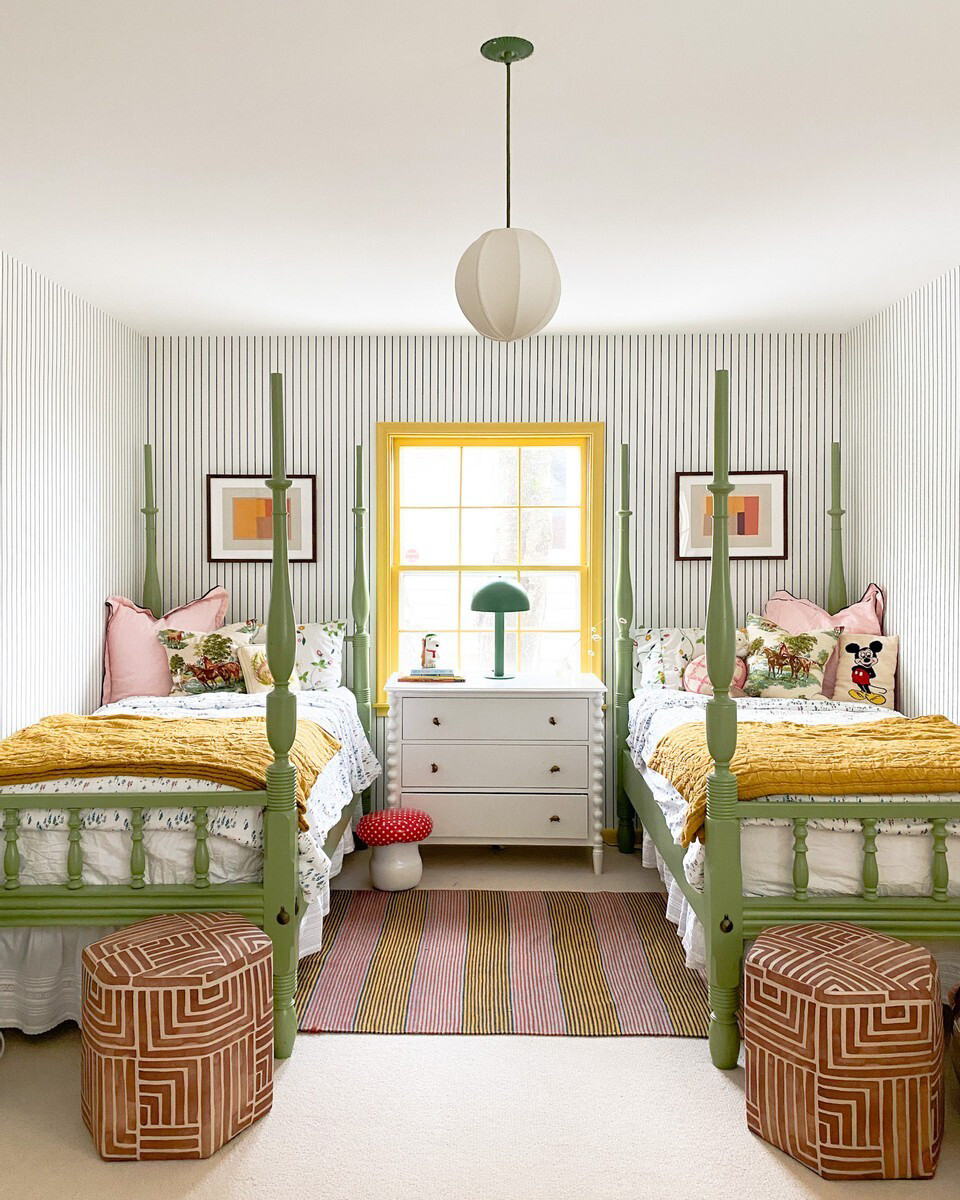
There are many causes individuals shrink back from utilizing colour of their residence decor and clothes selections. Private preferences are sometimes the explanation cited by me and others when explaining my black, white, and grey wardrobe, or our earlier residence’s usually impartial palette.
After we bought our new residence, it was initially a provided that I might paint all of it white or some impartial shade. I assumed having white partitions could be the easiest way to start out recent. What shocked me, nevertheless, was how energizing the colour in our residence was and the way it impacted my temper. That obtained me serious about why we keep away from huge commitments like colourful paint. Except for assuming we’re not “colour lovers,” might the explanation we keep away from it even be partly that utilizing colours requires a really completely different design course of? Possibly one which, with out some understanding of colour concept, might be barely intimidating?
I do imagine one of many causes we have now been capable of stay with the brilliant colours on our partitions is that I’ve some fundamental information of colour concept and that I’ve organized the furnishings we’ve collected through the years with colour concept in thoughts.
So right now, I’m going to clarify slightly crash course in colour concept.
What Is Shade Idea?

Shade concept is the science behind the way in which we course of and interpret colours. It entails various kinds of colour combos, proportions of every colour, and ends in particular advisable makes use of of colour. One of the simplest ways to consider it’s as a baseline for understanding basic interpretations of colour, as a result of every of us goes to see colour in another way and assign it completely different meanings based mostly on our experiences in and sensitivity to inside environments.
In brief, the colour wheel is a roadmap to understanding colour and the way we course of it in particular combos.
A bit enjoyable historical past truth—Sir Isaac Newton created the primary colour wheel. Since then, artists, scientists, and different creatives have used it as a baseline, basis, and framework for utilizing colour in a wide range of mediums. On this case, we’re going to be speaking about colour in inside design.
Shade concept is the science behind the way in which we course of and interpret colours. It entails various kinds of colour combos, proportions of every colour, and ends in particular advisable makes use of of colour.
The colour wheel consists of three main colours—blue, yellow, and purple—from which all different colours are derived. When main colours are combined, they create inexperienced, orange, and purple. These are known as secondary colours. And when secondary colours are combined with main colours, you have got six tertiary colours, similar to blue-green and red-orange.
Including black and white adjustments the shade and tint of those twelve baseline hues, creating a complete world of complicated design selections to make.
The factor that helps me the MOST is contemplating colour concept as a solution to preserve colour choice much less overwhelming. For those who draw a line straight down the middle of a colour wheel, you’ll see cool and heat colours on both facet. The colour wheel will inform us that reds and greens will all the time create fascinating concord as a result of they’re what we name complementary colours—two hues positioned reverse from one another on the colour wheel.
Deciding on complementary colours is a straightforward—and high-contrast—solution to create a colour scheme. A number of of the opposite methods to pick a colour scheme embody:
Triad: You possibly can decide a triadic colour scheme by drawing a triangle on the colour wheel. It will end in a vivid, daring palette with contrasting hues that also complement one another nicely.
Monochromatic: To create a monochromatic colour scheme, choose one major hue and add in several shades (including black to a hue), tints (including white to a hue), or tones (including grey to a hue). It will create a extra refined colour scheme. You possibly can see an instance of how hues work along with shades and tints within the first graphic proven above.
Analogous: An analogous colour scheme mixes colours that sit subsequent to one another on the colour wheel, similar to purple, red-purple, and purple, or blue, blue-green, and inexperienced.
There Are No Unhealthy Colours, Simply Unhealthy Shade Decisions
Understanding that the psychology of colour is baked into the colour wheel helps provide the instruments to make fewer errors. The place we go flawed with colour is commonly in two areas: the supposed use of the house (and the general temper you’re needing to create) and the proportion of colours used based mostly on the depth of the hues.
How Shade Units the Temper
Shade is a lot greater than private preferences. If you find yourself in an area, the way in which your eye interprets colour and the mix of colours impacts the way in which you expertise the house—each your basic temper and total consolation degree.
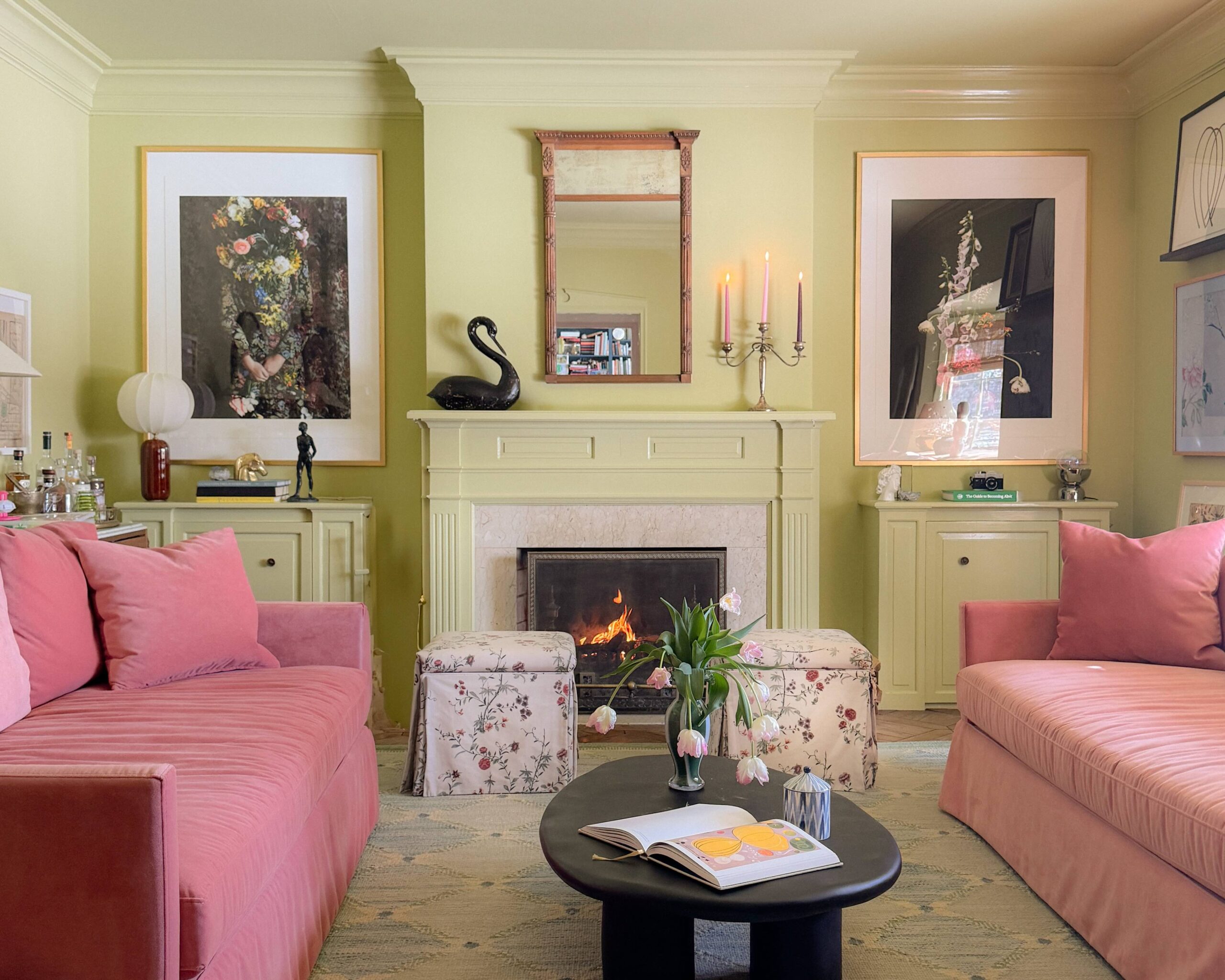
You might need damaging reminiscences or experiences from an area while you have been a child that impacted how you are feeling about sure colours right now. For those who’re a delicate individual, like me, these experiences is likely to be more durable to place into phrases. That is the place I like to start out when serious about design selections for a room, as a result of with out contemplating the supposed use of an area and the temper you’re seeking to embody, colour concept is simply concept.
For instance, blues, plums, and gem tones will carry a wealthy but soothing feeling to a room, working nicely in areas like a examine, library, or front room. Shiny, heat shades like yellow, chartreuse, and purple can carry a liveliness appropriate for kitchens, eating rooms, playrooms, and even household rooms.
Shade Proportions Matter
I’m going to make use of my home for instance. The unique house owners of the house chosen such daring paint colours and used them so broadly, it virtually turns into much less of a focus and extra of an total temper for the room. So we determined to herald furnishings selections that might arise towards such a heavy-handed use of daring hues.
In our peach room, we chosen a sample with pinks, blues, and greens to supply visible curiosity, then added impartial items of furnishings in several textures (woven cotton and velvet) to floor the palette and supply areas of relaxation. Within the yellow room, we introduced in navy blue velvet chairs and brilliant magenta florals to assist floor the extremely vibrant shade of yellow.

Daring colours want daring accents, however after they distinction—like peach and inexperienced or yellow and navy—you’re going to wish to stability out the proportions with out making a state of affairs the place the daring colours are going to conflict. Getting colour proportions proper is the place the artwork of inside design actually shines.
Impartial IS a Shade
The most important lesson for impartial colour lovers is to search for colours that act as neutrals. Lavender is a good instance, and so is navy. A inexperienced with simply sufficient grey to it brings the vibrancy you crave; it additionally permits sufficient flexibility for the self-taught inside designer to make some foolproof decor selections which are daring however much less everlasting than deciding on a brilliant and saturated paint colour or wallpaper.
We needs to be asking ourselves why we’ve prevented colour within the first place. . . . Can we be taught to consider colour as a crucial a part of the design equation that negates traits and as a substitute enhances the expertise we have now inside an area?
If there’s something to remove from this little lesson in colour, it’s that we needs to be asking ourselves why we’ve prevented colour within the first place. Is it out of concern of dedication to one thing we could develop “sick” of? Can we be taught to consider colour as a crucial a part of the design equation that negates traits and as a substitute enhances the expertise we have now inside an area?
I’d encourage you to make use of colour concept as your information when introducing colour into your own home, whereas additionally bringing in your individual private preferences and what feels greatest to you in an area. Shade concept is a science and likewise an artwork—one which depends in your private enter.
I don’t know if I might be asking myself these questions had I not moved into a house with colours I might have in any other case by no means chosen. But it surely definitely has modified the way in which I’ll design the remainder of the house and the way in which I’ll take into consideration colour and house ceaselessly.

Kate is the founding father of Wit & Delight. She is at present studying the way to play tennis and is ceaselessly testing the boundaries of her inventive muscle. Observe her on Instagram at @witanddelight_.