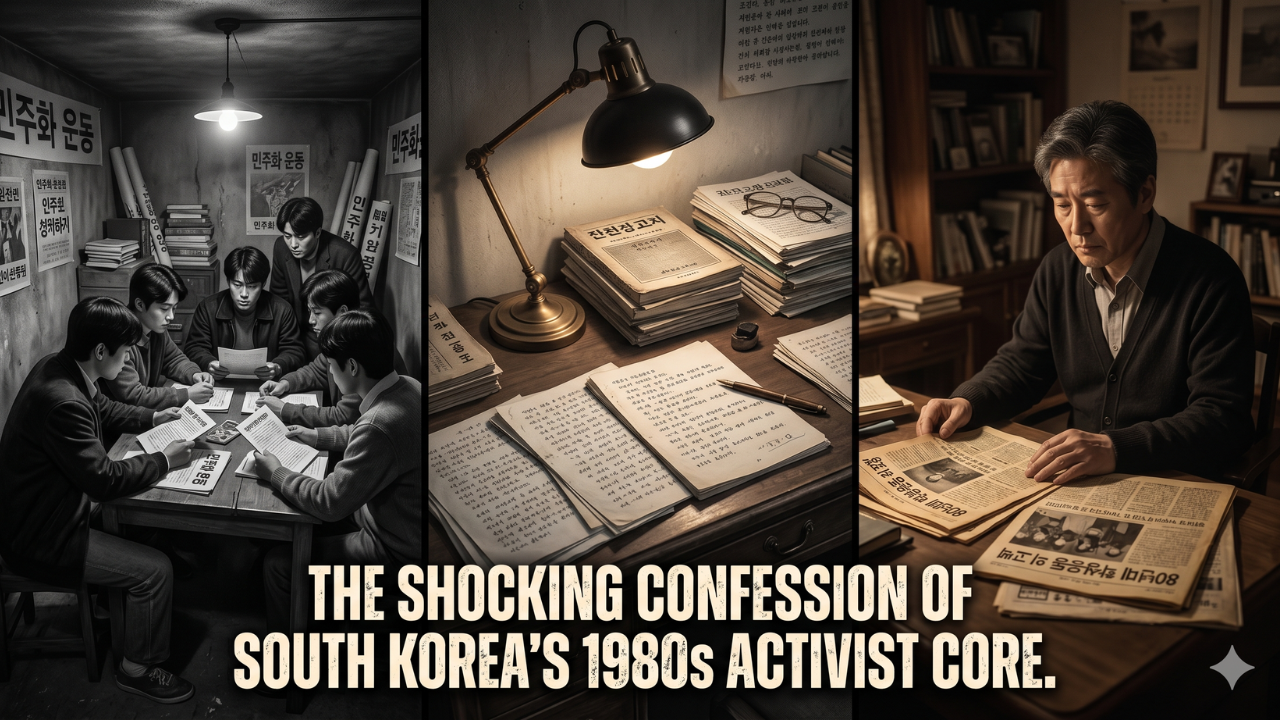
Introduction: The Dual Reality of a Democratic Powerhouse
To the outside world, South Korea is universally celebrated as a triumph of liberal democracy and rapid economic expansion. It is the nation of the “Miracle on the Han River,” a technological giant, and a cultural exporter that commands global attention. However, historical and political analyses reveal a much more complex, and often darker, reality operating just beneath the surface. For decades, a deeply entrenched ideological war has been waged within the country, orchestrated by what experts and political historians refer to as the “Hidden State.”
This subterranean political ecosystem did not emerge overnight. It is the result of meticulous, long-term strategies designed to subvert the established democratic order of the 1948 Republic of Korea from the inside out. Instead of overt military aggression, this shadow movement utilized ideological infiltration, targeting the very intellectual and cultural foundations of the nation. By embedding themselves within universities, literary circles, and political factions, radical underground organizations have quietly shaped the trajectory of South Korean society.
Understanding the modern political landscape of South Korea requires an unflinching look at this hidden history. At the center of this clandestine network was the Unification Revolutionary Party (URP), an organization that, despite severe crackdowns in the 1960s, allegedly laid the groundwork for a lasting parallel power structure. In this comprehensive analysis, we will explore the origins of the URP, the strategic capture of South Korea’s intelligentsia, and how these historical undercurrents continue to influence the nation’s political identity today.
The Origins of the “Hidden State” and the Unification Revolutionary Party (URP)
To comprehend the depth of South Korea’s internal ideological divide, one must trace the roots back to the establishment of the Unification Revolutionary Party (URP) in the 1960s. Formed in March 1964 and officially grounded in the Juche ideology of North Korea, the URP was not a mere student protest group; it was a highly organized underground faction. Its ultimate goal was the systematic dismantling of the anti-communist social system and the execution of a “people’s democratic revolution” within South Korea.
The URP operated as the vanguard of the “Hidden State,” receiving direct guidance and financial backing from Pyongyang. In 1968, the South Korean intelligence apparatus uncovered this massive subterranean network, resulting in the arrest of 158 individuals. Among those detained were prominent figures and intellectuals from elite institutions, including Seoul National University. Key operatives like Kim Jong-tae, Kim Chil-rak, and Shin Young-bok were revealed to be deeply intertwined with North Korean leadership, with some having secretly traveled to Pyongyang to meet directly with Kim Il-sung.
Despite the arrests and the execution of its top leadership, the influence of the URP did not evaporate; it merely evolved. The 1968 crackdown exposed a terrifying reality: the infiltration had already reached the upper echelons of South Korean academia and culture. North Korea’s response to the arrests—elevating figures like Kim Jong-tae to heroic status and naming factories after him—demonstrated the high value placed on this covert operation. The URP had successfully planted the seeds of the “Hidden State,” creating an enduring ideological lineage that survived long after the initial organization was dismantled.
- Key Takeaways on the URP’s Infiltration:
- Elite Recruitment: Targeted top-tier university students and intellectuals to lead the movement.
- Direct Link to Pyongyang: Leaders received ideological training, funding, and direct orders from North Korean leadership.
- Long-Term Survival: Despite the 1968 crackdown, the ideological framework of the URP persisted, functioning as the ruling philosophy of the underground state.

Cultural Hegemony: From ‘Cheongmaek’ to ‘Changbi’
A critical component of the “Hidden State’s” strategy was the realization that political power is intrinsically linked to cultural and intellectual dominance. To achieve this, the underground movement focused heavily on capturing the literary and academic spheres. According to historical documents outlining North Korean directives for South Korean revolution, there was a clear mandate to establish legal, front-facing publications to spread their ideology subtly. This led to the creation of the magazine ‘Cheongmaek’ (청맥) in 1964, which served as a crucial organ for ideological dissemination among intellectuals.
When ‘Cheongmaek’ was eventually suppressed, its ideological mission did not die; it transitioned into new, highly influential cultural institutions. The most notable successor in this intellectual lineage was the literary journal ‘Changjak gwa Bipyeong’ (Creation and Criticism, often abbreviated as ‘Changbi’), founded by Paik Nak-chung in 1966. While presenting itself as a legitimate platform for literature and social critique, analysts argue that ‘Changbi’ effectively inherited the ideological framework of its predecessors, becoming a formidable force in shaping South Korea’s intellectual discourse.
The success of this cultural infiltration lies in its subtlety. By dominating literary criticism and historical interpretation, these intellectual circles managed to normalize radical perspectives under the guise of “national literature” or “progressive thought.” Over decades, figures associated with these movements positioned themselves as the ultimate moral authorities within South Korean academia. This intellectual capture ensured that the foundational legitimacy of the 1948 Republic of Korea was constantly questioned, eroded, and undermined from within by the very scholars tasked with educating the next generation.
- The Strategy of Intellectual Infiltration:
- Creation of Front Organizations: Using legitimate publishing houses and magazines to mask radical agendas.
- Dominating the Narrative: Controlling literary and social critiques to shape public sentiment over decades.
- Eroding National Legitimacy: Systematically undermining the historical foundations of the South Korean republic through academia.
Historical Revisionism and the Modern Political Landscape
The enduring power of the “Hidden State” is most evident in its ability to reinterpret key historical events to serve its ideological goals. The April 19 Revolution of 1960, a genuine student-led uprising against electoral fraud, is a prime example. While initially a defense of liberal democracy, radical elements within the “Hidden State” have spent decades attempting to co-opt the legacy of 4.19. They sought to reframe it not as a demand for fair elections, but as a proto-socialist uprising, bridging the gap between democratic protests and their ultimate goal of a systemic revolution.
This relentless historical revisionism has profound implications for South Korea’s modern political landscape. The ideological descendants of the URP and the ‘Changbi’ intellectual circles remain deeply influential in contemporary politics. Prominent intellectuals who built their careers within this “Hidden State” framework continue to wield significant power, often endorsing political candidates and shaping national policies. The historical text notes the shocking continuity of this influence, where figures who championed radical ideologies in their youth are now treated as revered elders in mainstream political discourse.
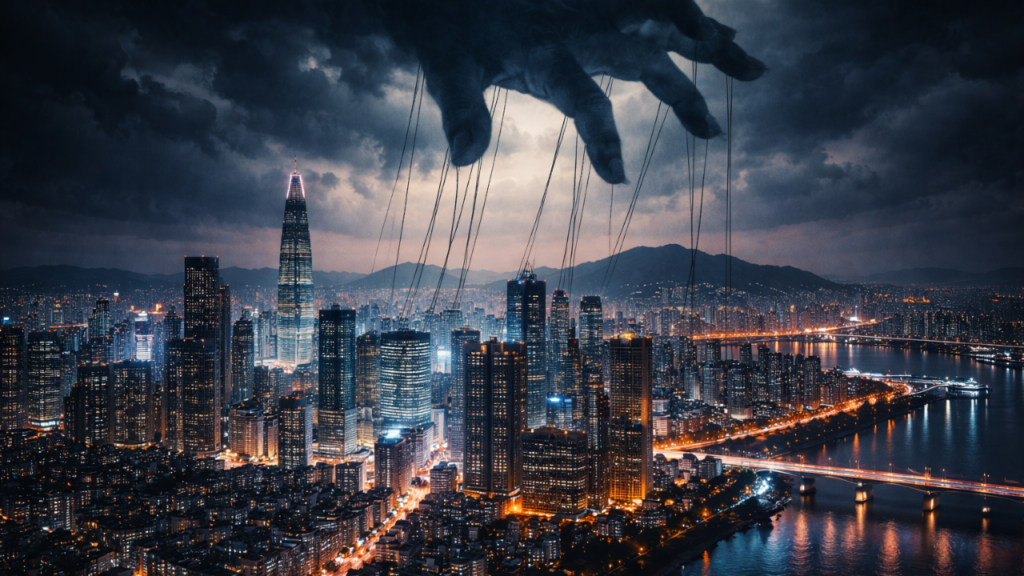
Consequently, South Korea today faces a complex internal battle that goes largely unnoticed by the international community. The nation is not merely divided by standard partisan politics, but by a fundamental, existential conflict over its national identity. The “Hidden State” operates as an anti-state within the state, utilizing the freedoms provided by liberal democracy to slowly dismantle it. Understanding this sophisticated, multi-generational ideological war is essential for anyone seeking to comprehend the true nature of South Korean politics today.
Conclusion & Summary: The Enduring Threat to Democracy
The history of South Korea’s “Hidden State” and the Unification Revolutionary Party is a stark reminder that physical borders are not the only frontlines in an ideological war. Beneath the veneer of economic prosperity and cultural global dominance, a quiet, methodical campaign of intellectual and political infiltration has been underway for over half a century. By targeting universities, monopolizing literary discourse, and manipulating historical narratives, this underground apparatus has established deep roots within the republic.
The actionable takeaway from this historical analysis is the vital importance of critical vigilance in any free society. When ideological subversion masquerades as progressive intellectualism, it becomes incredibly difficult to combat. Recognizing the historical context behind contemporary political movements is crucial. The survival of South Korea’s liberal democracy depends not only on its military or economic strength, but on its ability to clearly identify and intellectually confront the enduring legacy of this “Hidden State.”
Looking for more in-depth analysis and detailed insights? We dive much deeper into this topic in our full video. Click the link below to watch the complete episode on YouTube, and don’t forget to subscribe for more expert updates!
💡 Frequently Asked Questions (FAQ)
Q1: What was the Unification Revolutionary Party (URP) in South Korea?
A1: The Unification Revolutionary Party (URP) was an underground political organization formed in the 1960s in South Korea. Guided and funded by North Korea, its primary objective was to build a clandestine power structure to overthrow the South Korean government and establish a socialist system.
Q2: How did the “Hidden State” infiltrate South Korean society?
A2: The “Hidden State” utilized a long-term strategy of intellectual and cultural infiltration. Rather than direct armed conflict, they targeted elite universities and created influential literary publications—such as ‘Cheongmaek’ and later ‘Changbi’—to slowly shift the ideological landscape of the nation’s intelligentsia.
Q3: Why is the concept of the “Hidden State” relevant to modern South Korean politics?
A3: The concept is highly relevant because the ideological descendants of these early underground movements continue to hold significant influence in South Korean academia, media, and politics today. They actively engage in historical revisionism, shaping public discourse and subtly challenging the foundational legitimacy of the republic.
🌿 Weekly wellness, health & beauty insights — straight to your inbox
Free subscription · Cancel anytime