The financial decisions made during your 20s don’t just affect the next few years; they set the entire trajectory of your adult life. Most young adults approach this decade completely backwards, viewing it as a time for unconstrained spending while postponing financial responsibility until their 30s.
That approach is fundamentally flawed. In reality, your 20s are basic financial quicksand: the decisions you make now determine whether you spend your 30s building serious wealth or continuing to live paycheck to paycheck, repeating the same financial groundhog day until you retire—if you ever can retire.
The secret that high-net-worth individuals understand is that small, smart choices in your early 20s create massive, exponential results. A mere $100 invested at age 25 grows significantly more than $100 invested at age 35, thanks to the magic of compound interest. A $100 spent on a depreciating luxury item simply becomes debt or a faded memory.
Living in California, I’ve seen this play out repeatedly. I’ve met people struggling with hefty car payments on $40,000 vehicles they can’t afford, yet they question whether a simple S&P 500 index fund is ‘safe’ or ‘too slow.’ Nick’s script hits the nail on the head: your purchases now create your freedom later. Here are the seven purchases that can genuinely change your life.
1. Upfront Investment in a Scalable Side Hustle
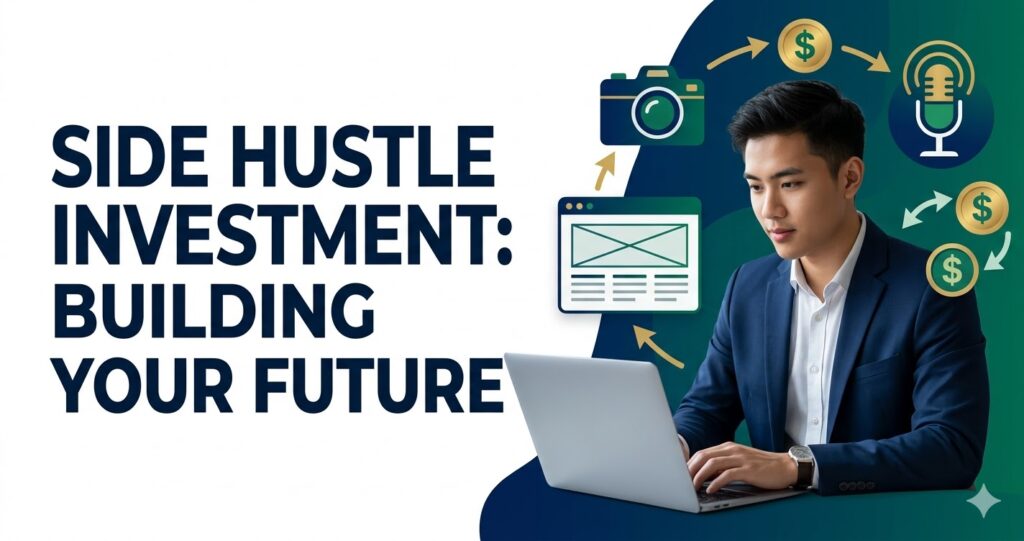
The first purchase that changes everything is the initial capital required to get a side hustle off the ground properly. While many think of side hustles as free ventures, the most successful ones usually require some form of upfront investment.
This isn’t just about making extra spending money for the weekend; it’s about developing a secondary, potentially scalable, income stream that can accelerate your financial freedom faster than any traditional 9-to-5 job can.
Identifying Your Marketable Skill
Most people get this wrong: they try to start a business completely outside their expertise. If you’re skilled with website development, invest in the correct hosting tools. If you are a naturally good photographer, buy quality lighting and editing software. The key is to take your existing strengths, refine them into a professional service, and invest what it takes to launch correctly.
Expert Tip: In your 20s, your greatest asset is the ability to take risks. With fewer financial obligations like a mortgage or children, you can afford to fail and bounce back quickly. But if you succeed, you may never have to worry about traditional employment again.
Side Hustle Case Study: Photography
- Initial Investment: $1,500 (Entry-level DSLR camera, basic lens, Lightroom/Photoshop subscription, website domain/hosting).
- Target Market: Local portraits, small business product shots.
- Result (After 1 Year): Booking 4-5 small gigs per month at $300/gig. Additional income: $1,200/month.
- ROI (Return on Investment): The side hustle generated $14,400 in the first year, paying off the initial investment 9x over.
2. Low-Cost S&P 500 Index Funds (Roth IRA)
The second purchase that can fundamentally change your life is also where the magic of compound interest really shows its power. In your 20s, you have the single most unfair advantage in the entire financial universe: Time.
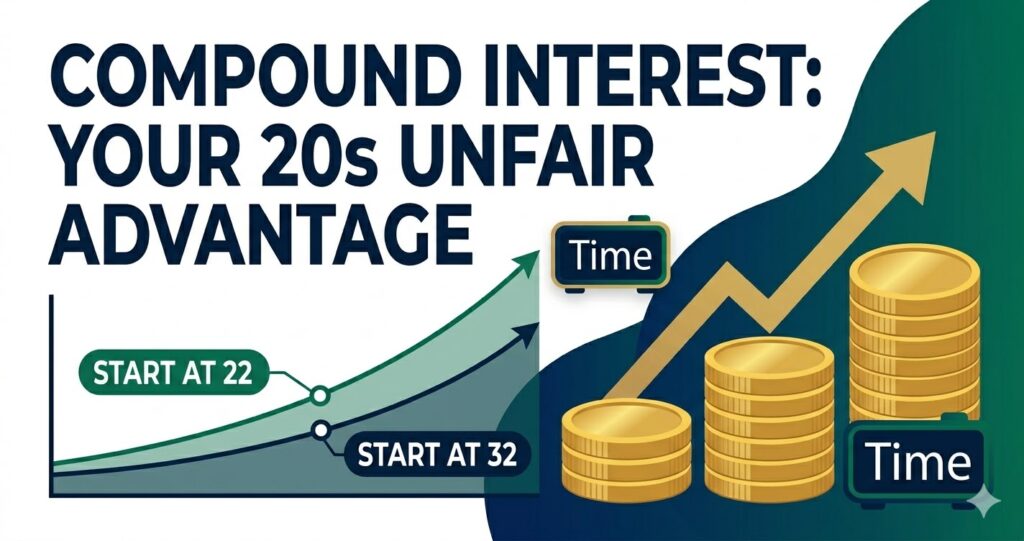
If you invest just $200 per month into an S&P 500 index fund starting at age 22, and it grows at the historical average of about 10% annually, you’ll have over $1 million by the time you’re 67. That is less than $7 a day creating millionaire status.
The Power of Starting Early: Start at 22 vs. 32
Waiting even ten years dramatically reduces your final nest egg.
- Start at 22: Invest $200/month for 45 years. Estimated final value: **$1,048,000+**.
- Start at 32: Invest the same $200/month for 35 years. Estimated final value: **$695,000+**.
Waiting ten years cost you $353,000 in the long run. Index funds are simple: they don’t promise to make you rich overnight, but they consistently outperform most actively managed funds.
Experts Tip on Automation
The key is to automate these contributions so the money gets invested before you even see it in your checking account. If you never see the money, you won’t spend it. A Roth IRA is particularly powerful here, allowing your gains to grow and eventually be withdrawn completely tax-free.
3. A Strategic Plane Ticket (Investing in Experiences)
Purchase number three may seem frivolous, but it can actually be one of the smartest investments you can make in your 20s. Traveling while young, but doing it strategically, is not about blowing your savings on expensive vacations. It’s about investing in experiences and connections that change your entire perspective and open doors you didn’t know existed.
Travel builds a kind of confidence that nothing else can. When you figure out how to navigate a foreign city, communicate through a language barrier, and solve problems in unfamiliar environments, you develop a self-reliance that serves you for life.
Maximizing Travel Rewards and Credit Cards
The smart way to travel strategically is by utilizing credit card points and rewards programs. Get a travel rewards credit card, use it for your normal expenses, and pay it off in full every single month. Never carry a balance, but collect those points and use them for free or heavily discounted travel. This also builds your credit score, a critical component when you want to buy a house.
Travelers Checklist: Strategic Travel
- [ ] Get a high-yield travel credit card with a welcome offer.
- [ ] Pay off entire balance monthly.
- [ ] Collect all necessary points and miles.
- [ ] Travel during ‘shoulder’ seasons to save points.
4. Legitimate Education, Books, and Advanced Skill Development
The fourth life-changing purchase is education, but not the kind that puts you $100,000 in debt. A $20 book can change your entire mindset about money and success. A few hundred dollars spent on a legitimate course can teach you skills that increase your income by thousands.
Your brain is most adaptable in your 20s, which means you can learn new skills faster than you ever will be able to again. Whether it’s learning to code, understanding digital marketing, developing sales skills, or mastering a trade, every skill you acquire becomes part of your arsenal for the rest of your life.
Finding Authentic Learning Sources
The key word here is legitimate. Avoid the $997 courses from influencers posing next to rented sports cars. Instead, focus on learning from people who have actually built successful businesses or careers in areas you are interested in. If affordable, look at community college courses or legitimate platforms like Coursera.
5. First-Time Real Estate Purchase (House Hacking)
The fifth purchase is the big one that scares most people in their 20s, but it can absolutely transform your financial future. Real estate accelerates wealth building through three main mechanisms:
- Appreciation: Property generally increases in value over time.
- Income: Renting part of the property out provides income to help pay the mortgage.
- Leverage: You use a relatively small down payment to control a valuable asset, and other people (renters) pay for your investment through their rent.
Overcoming the Affordability Problem
Nick points out the brilliant concept of ‘house hacking’ to overcome affordability challenges. Buy a duplex, live in one unit, and rent out the other. Or buy a single-family home and rent out rooms to roommates. If your local market supports it, explore short-term rentals through Airbnb. The goal is to let other people pay your mortgage while you build equity and benefit from appreciation.
Real Estate Case Study: House Hacking Duplex
- Purchase Price: $300,000 (3.5% down payment: $10,500).
- Total Monthly Mortgage/Costs: $2,100.
- Rent from Unit B: $1,500.
- Final Housing Cost (Your portion): $600/month.
- Benefit: In this example, you live in a property and only pay $600 per month towards your housing while building substantial equity and benefiting from 100% of any appreciation.
6. Cheap, Reliable Transportation (The $600,000 Mistake)
This purchase might sound boring, but it’s actually one of the most important financial decisions you’ll make. Buying cheap, reliable transportation is a critical step towards freedom. Notice I didn’t say buy a car. I said buy transportation.
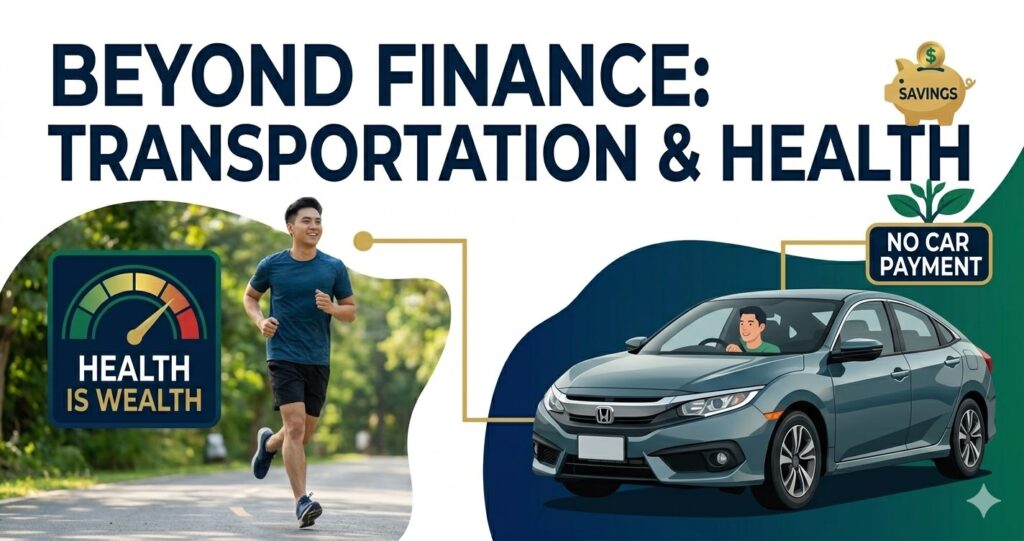
Most people in their 20s think they need a new car to look successful. They finance $30,000 vehicles they can’t afford, making payments that eat up a huge chunk of their income for six or seven years. Meanwhile, that same money could be growing in investments, compounding into serious wealth by the time they are 40.
The Real Cost of Car Payments in Your 20s
Instead of financing, buy a 3- to 5-year-old Honda Civic or Toyota Corolla (or similarly reliable models) for $10,000 to $15,000. These cars will run for 200,000 miles if maintained properly and are cheap to ensure and repair.
Car Payment Savings: Investment Comparison
- Assumption: Avoid a $500 monthly car payment and invest that same money at 8% annual returns.
- Result (After 30 years): You will have over $600,000.
- Conclusion: The real cost of that $500 car payment in your 20s isn’t the $500 you are paying, but the $600,000 you are NOT investing.
7. Strategic Health and Wellness Investment
The seventh and final life-changing purchase is investing in your health. This gets overlooked constantly because the benefits aren’t immediately obvious, and the cost of ignoring it doesn’t show up right away, but your health determines everything else.
How hard you can work, how long you can pursue your goals, how much energy you have for your side hustle, and whether you’ll actually be around to enjoy the wealth you are building.
Establishing Habits of Energy and Performance
Think of health investments as performance enhancers for everything else you are trying to accomplish. Better sleep means better decision-making. Better nutrition means more consistent energy levels. Regular exercise means better stress management and mental clarity. These are not luxuries; they are fundamental requirements for building the kind of life you actually want.
The Interconnected Nature of Wellness
- [ ] Focus on good food instead of living off energy drinks and fast food. Regular sleep is essential.
- [ ] Good sleep and nutrition are key performance drivers.
If you are constantly exhausted, stressed out, or dealing with health problems that could have been prevented, it doesn’t matter how smart your investment strategy is, you won’t have the energy or focus to execute it properly. The hidden cost of poor health is the opportunity cost of not being able to work at full capacity.
Start with one of these purchases today because 10 years from now, you’ll either thank yourself or wish you had. The character-building exercises of saying ‘no’ to short-term spending will define what kind of person you become. Start with one of these purchases today, because 10 years from now, you’ll either thank yourself or wish you had.
(FAQ)
Q1: How much money do I really need to start an effective side hustle?
A1: While some side hustles are relatively low-cost, many of the most successful ones do require some upfront investment. The exact amount depends on the type of business, but it’s crucial to research the necessary equipment, software, or licenses before you begin. Even a small initial investment in a side hustle can have a massive impact on your financial future.
Q2: Is it too late to start investing in my 20s?
A2: Absolutely not! While starting as early as possible provides the biggest advantage, any time is better than never. The key is to start now. Even investing a small amount each month can grow significantly over time thanks to the power of compound interest. Don’t let the thought that you started ‘late’ prevent you from taking action today.
Q3: Is ‘house hacking’ really a feasible strategy for everyone?
A3: House hacking can be a very powerful wealth-building strategy, but it requires careful research and planning. Factors like local real estate market conditions, your ability to qualify for a mortgage, and your comfort level with managing tenants all play a role. However, for those who are willing to put in the effort, house hacking can dramatically accelerate their journey to financial freedom.