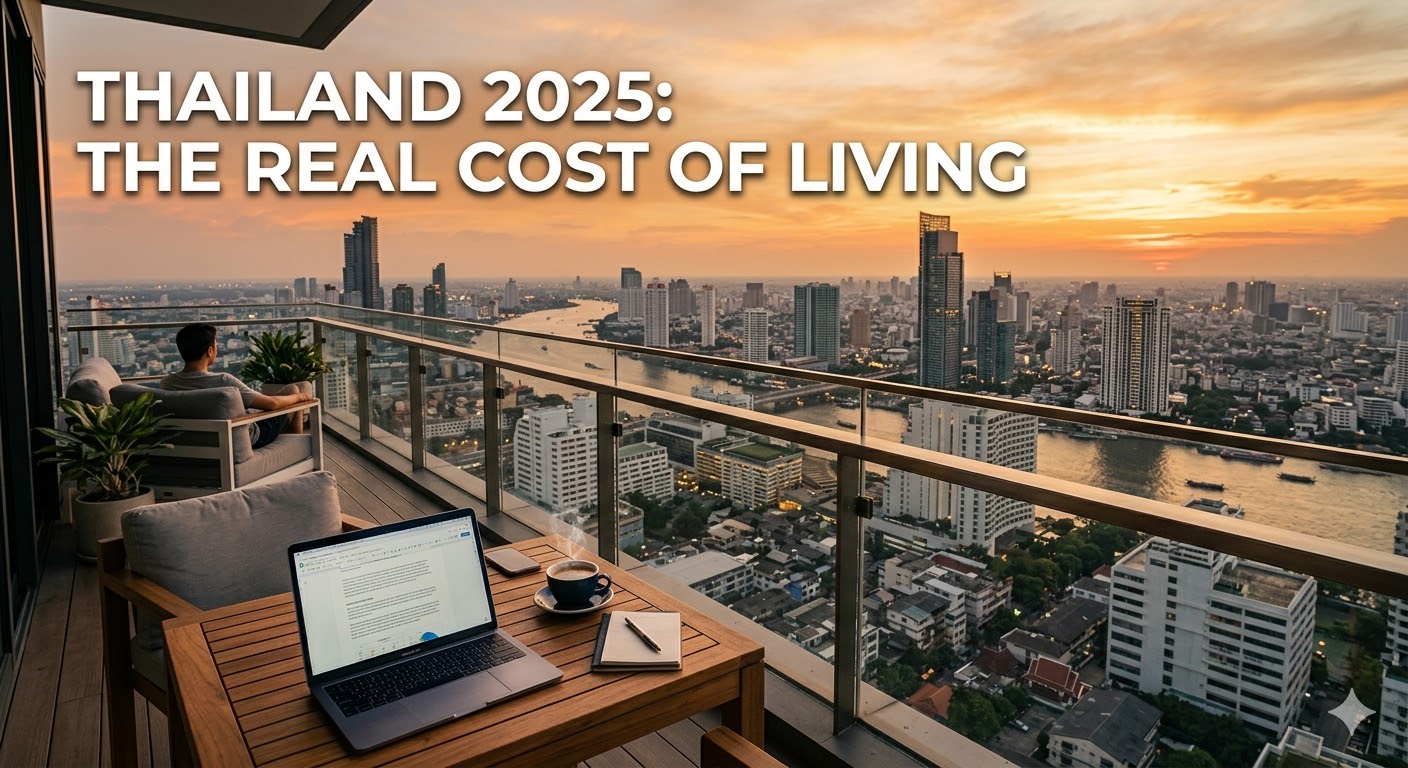
Living in California, I’ve seen countless friends and colleagues reach a breaking point with soaring housing prices, relentless traffic, and the sheer cost of keeping their heads above water. It is no wonder that so many Americans are looking across the Pacific, setting their sights on the vibrant, sun-drenched lifestyle of Southeast Asia. Moving to Thailand in 2025 has become a massive trend for remote workers, retirees, and expats seeking a higher quality of life for a fraction of the cost.
But before you pack up your life in the States and book a one-way ticket to Bangkok or Chiang Mai, you need a reality check. Social media often paints a flawless picture of luxury condos and endless beach days, but uprooting your life requires meticulous planning. This comprehensive guide breaks down exactly what you need to know about relocating to Thailand, from navigating complex visa regulations to securing the right apartment without getting scammed.
Why You Need a Trial Run Before Packing Your Bags
It is incredibly easy to fall in love with the idea of Thailand after watching a few travel vlogs. You might be entirely convinced that it is your ultimate dream destination. However, taking a month-long vacation is fundamentally different from building a permanent life in a new country.
The Southeast Asia Scouting Trip
Before committing to a permanent move, you must visit Thailand—and ideally, neighboring countries like Vietnam or the Philippines—for an extended scouting trip. Many Americans assume Thailand is the perfect fit, only to realize they prefer the slightly lower cost of living in Vietnam or the widespread English proficiency in the Philippines.
If you decide to do a trial run in Thailand, do not just stay in one place. Build an itinerary that forces you to experience different lifestyles:
- Bangkok: Rent an Airbnb in diverse neighborhoods (like Thong Lo or Sukhumvit) to feel the pulse of the city.
- Coastal Regions: Spend weekends in Pattaya or Phuket to see if beachside living suits your daily routine.
- The North: Visit Chiang Mai to experience the quieter, digital nomad-heavy mountain culture.
The “Vacation Mode” Trap
Here is a crucial pro tip: while on your trial run, force yourself to live a normal life. Many first-timers arrive in spectacular holiday mode, eating at high-end restaurants and partying every night, and then mistakenly compare that exhilarating lifestyle to their mundane work routine back home in the US. That is not an accurate representation of relocation.
If you move to Bangkok, your day-to-day routine will likely mirror your life in America: working from a laptop, commuting to cafes, hitting the gym, and hanging out with friends. The primary differences will be better weekend getaways and a more vibrant street food scene, but the core routine remains the same.
The Philosophy of Relocation: Wherever You Go, There You Are
There is a profound psychological aspect to moving abroad. If you are struggling with mental health issues, burnout, career anxiety, or relationship problems in the United States, those issues will absolutely board the plane with you. A new environment does not magically erase fundamental life challenges. Thailand can offer a beautiful backdrop and financial relief, but it cannot fix deep-rooted personal hurdles.
The Real Cost of Living in Thailand (2025 Budget Breakdown)
Let’s talk numbers. The truth about Thailand in 2025 is that it can be as cheap or as extraordinarily expensive as you want it to be. While it is generally more affordable than the US, it is no longer the bottom-barrel budget destination it was a decade ago, especially when compared to places like Vietnam.
Setting a Realistic Monthly Budget
For a comfortable, middle-class Western lifestyle, you should anticipate a monthly budget ranging from $1,300 to $2,000.
What does a $1,500 – $2,000 monthly budget get you?
- A modern, well-located condo with luxury amenities (gym, rooftop pool, co-working space).
- Daily transportation using ride-hailing apps (Grab) and the elevated train systems (BTS/MRT).
- Eating out for almost every meal, mixing local street food with mid-range international restaurants.
- An active, fulfilling social life and weekend entertainment.
Renting Smart: Luxury vs. Local Options
Rent prices for the ultra-modern, heavily advertised social media condos are rising rapidly. If you want to stretch your budget, look beyond the brand-new luxury high-rises.
Case Study in Bangkok Real Estate: You could rent a massive, 200-square-meter older condo in a premium neighborhood like Thong Lo for around 50,000 THB (approx. $1,400 USD) a month. Just a few blocks away, a brand-new luxury high-rise will charge the exact same price for a unit that is one-quarter of the size. Prioritizing slightly older buildings is the best way to secure substantial living space without blowing your budget.
The Financial Safety Net: Why You Need $5,000 Minimum
Do not attempt this move on a whim. You should have an absolute minimum of $5,000 in liquid savings dedicated solely to the transition—not to be confused with your monthly living expenses. Moving incurs heavy upfront costs:
- Security Deposits: Signing a standard 12-month lease requires a two-month security deposit plus the first month’s rent upfront.
- Visa Processing: Securing a long-term visa can cost hundreds to thousands of dollars.
- Unexpected Medical Needs: While healthcare is affordable, out-of-pocket emergencies add up quickly.
Navigating the Visa Maze as a US Citizen
Visas are often the most intimidating part of relocating, but Thailand has recently restructured its system to be much more accommodating to modern expats.
The 30-Day Visa Exemption and “Border Runs”
For US citizens, you can enter Thailand visa-free for up to 30 days (recently reduced from 60 days). You can extend this for an additional 30 days at a local immigration office for about $55.
Once those 60 days are up, some expats attempt “border runs”—leaving Thailand for a neighboring country and immediately returning to trigger a new 30-day stamp. While theoretically possible, immigration officers in 2025 are heavily cracking down on this. If you are doing back-to-back border runs, you will be flagged, interrogated, and potentially denied entry. You need a long-term solution.
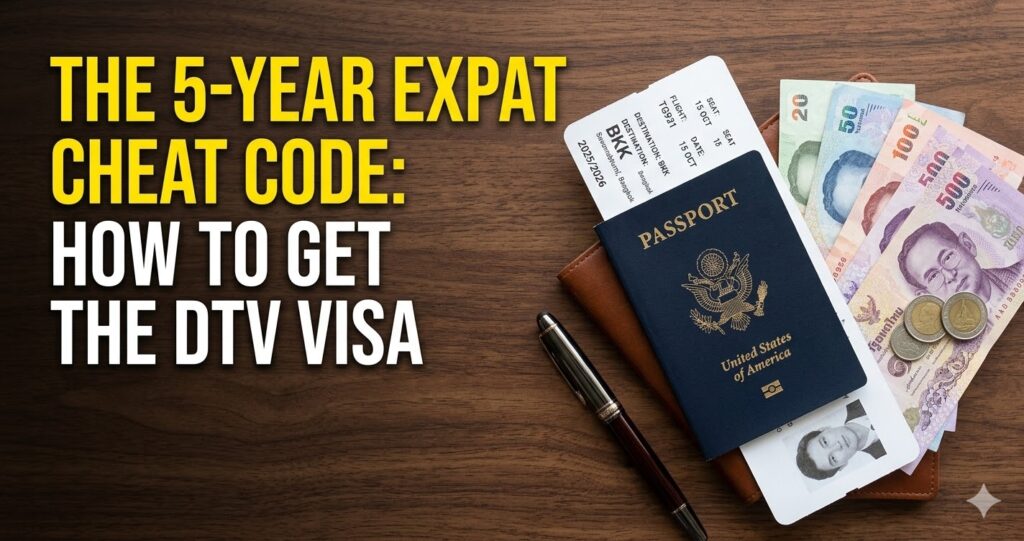
The Game Changer: The Destination Thailand Visa (DTV)
If you are a remote worker, digital nomad, or someone pursuing Thai “soft power” activities (like training in Muay Thai or culinary arts), the Destination Thailand Visa (DTV) is the ultimate golden ticket.
- Validity: 5 years.
- Stay Duration: You can stay for 180 days per entry. After 180 days, you simply leave the country and return to reset the clock for another 180 days. You can repeat this for the full 5 years.
- Cost: Approximately $300.
- The Catch: You must show proof of funds amounting to roughly $14,000 to $15,000 in your bank account. You do not need to spend this money; you just need to prove you have a financial safety net.
When you compare the $300 DTV to the famous Thailand Privilege Visa (Elite Visa)—which also grants a 5-year stay but costs an eye-watering $25,000—the DTV is an absolute no-brainer for American professionals.
Education and Retirement Visas
- Education Visa (ED Visa): Allows you to stay for 6 to 12 months by enrolling in Thai language courses or official Muay Thai programs. Warning: Immigration is well aware of “ghost students.” If you get this visa, you must actually attend classes. Officers at the airport will test your Thai speaking skills; if you cannot speak a word, you risk deportation.
- Retirement Visa: If you are over 50 years old and meet the financial requirements, this remains one of the most straightforward and secure long-term visa options available.
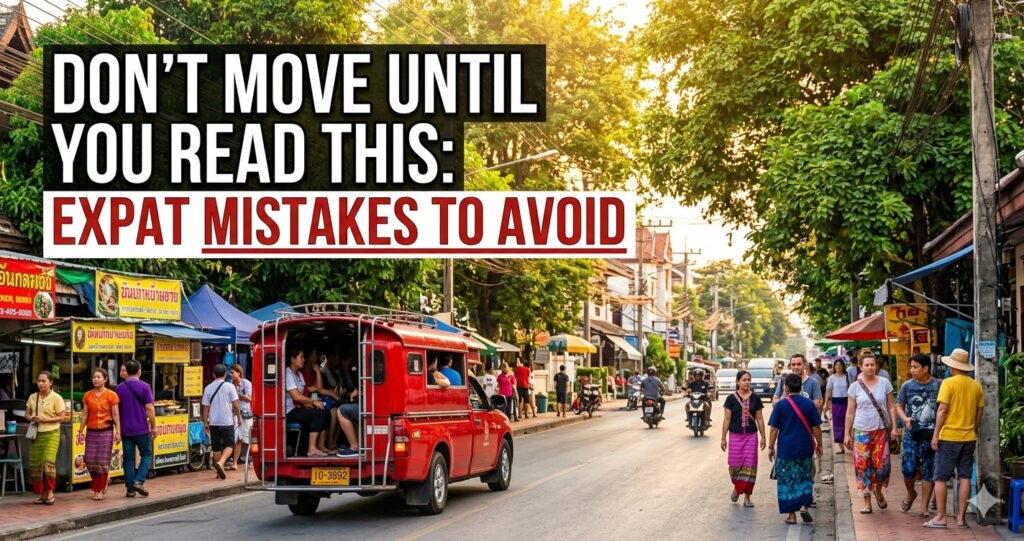
Essential Logistics: Healthcare, Housing, and Transport
Health Insurance for Expats
While out-of-pocket healthcare in Thailand is significantly more affordable than the US medical system, unexpected accidents (especially motorbike accidents) can result in massive hospital bills. Do not rely on luck.
Look into specialized expat health insurance. Providers like Genki offer comprehensive coverage for around $50 a month, protecting you within Thailand and during international travel.
Short-Term vs. Long-Term Accommodation
Never sign a 12-month lease before arriving in Thailand. The biggest mistake newcomers make is wiring a massive deposit for an apartment they have only seen online. Three months later, they realize the unit is too small, the building has a pest problem, or the neighborhood is nowhere near their social circle.
- Start Short-Term: Book an Airbnb or a hotel for your first 3 to 4 weeks.
- Explore the Ground: Use this time to physically tour different neighborhoods and view condos in person.
- Hunt for Deals: Once you are ready to sign a lease, check Facebook Marketplace groups (e.g., “Bangkok Rentals” or “Phuket Expats”). You can find incredible deals that bypass standard agency fees.
- Protect Yourself: Scams exist. Always tour the property in person, sign a physical contract, and request copies of the owner’s ID or passport before handing over your security deposit.
Staying Connected: The Olafly eSIM
The moment you land at Suvarnabhumi (BKK) or Don Mueang (DMK) airports, you will need internet access. Instead of waiting in exhausting lines for a physical tourist SIM card, use an eSIM provider like Olafly. You can download the app before you leave the US, purchase an unlimited high-speed 5G data plan, and activate it the second your plane touches down. (Tip: Use promo codes often found online to get travel discounts).
Getting Around Like a Local
Thailand’s transportation infrastructure is incredibly diverse:
- Ride-Hailing Apps: Download Grab, Bolt, and InDrive. Bolt and InDrive are generally much cheaper than Grab.
- Taxis: If you hail a street taxi, always insist they use the meter. Say, “Meter mai krap?” (if you are a man) or “Meter mai ka?” (if you are a woman). If they refuse, step out and find another. Flat rates are always heavily inflated tourist traps.
- Public Transit (Bangkok): The BTS (Skytrain) and MRT (Subway) are world-class—spotlessly clean, heavily air-conditioned, and ruthlessly punctual. They are your best defense against Bangkok’s notorious gridlock traffic.
- Motorbikes: Renting a scooter in northern cities like Chiang Mai is standard practice and relatively safe due to calmer traffic. However, driving a motorbike in Bangkok is highly discouraged for beginners due to aggressive driving cultures and chaotic intersections.
The Digital Nomad Blueprint: Working Remotely and Banking
Income Generation
I strongly advise against moving to Thailand to “wing it.” Burning your bridges in the US with only a few thousand dollars and a vague plan to start a business from scratch is a recipe for disaster.
The most successful expats are those who arrive with active, location-independent income. Securing a remote US job before you leave allows you to earn strong US dollars while spending in Thai Baht—the ultimate geographical arbitrage. If you intend to work locally for a Thai company, be prepared for salaries that are drastically lower than Western standards.
Money Management and Customs
When you make your initial move, bring cash. For US citizens, you can legally bring the equivalent of up to 50,000 THB in USD without facing complex customs declarations. Converting crisp, unblemished $100 bills at local currency exchanges (like Superrich) will yield a much better exchange rate than constantly pulling money from local ATMs, which charge hefty withdrawal fees.
- Credit Cards: Ensure you bring cards with zero foreign transaction fees. Be aware that American Express is rarely accepted in Thailand outside of high-end international hotels; Visa and Mastercard are king.
The Ultimate US Expat Relocation Checklist
If you are serious about making the leap in 2025, use this checklist to ensure you don’t miss any critical steps:
- [ ] Test the Waters: Book a 1-month minimum trip to explore Bangkok, Chiang Mai, and coastal islands.
- [ ] Secure Remote Income: Confirm your current job allows international remote work, or secure a location-independent freelance gig.
- [ ] Build the War Chest: Save a minimum of $5,000 for upfront relocation costs (deposits, visas, flights), completely separate from your daily budget.
- [ ] Visa Strategy: Apply for the DTV ($300 / 5 Years) if eligible, and ensure you have the required $15,000 proof of funds ready.
- [ ] Digital Preparation: Download Grab, Bolt, InDrive, and secure an Olafly eSIM before departure.
- [ ] Flight Hack: If entering on a tourist exemption, use an “Onward Ticket” service ($16) to provide legitimate proof of a return flight to satisfy immigration without buying a full-priced ticket.
- [ ] Cultural Integration: Start taking online Thai lessons. Even basic phrases will drastically improve your respect among locals and help you negotiate better rates.
Moving to Thailand is a life-changing decision that can offer unparalleled freedom, exceptional food, and a vibrant community. By approaching the transition with clear eyes, a solid financial plan, and an understanding of the local systems, your move in 2025 can be the start of your greatest chapter yet.
🌿 Weekly wellness, health & beauty insights — straight to your inbox
Free subscription · Cancel anytime