Economy & Personal Finance
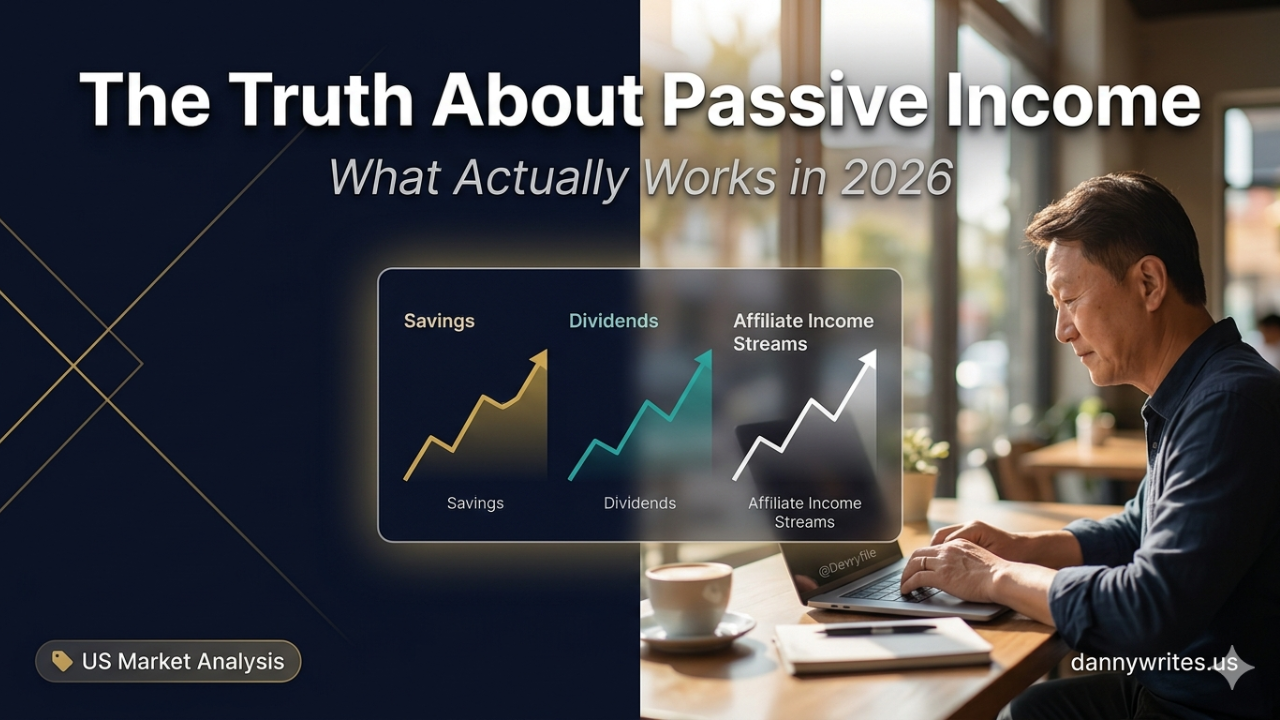
The Truth About Passive Income: What Actually Works in 2026
The internet is flooded with passive income promises. Here’s what the data — and real experience — actually says.
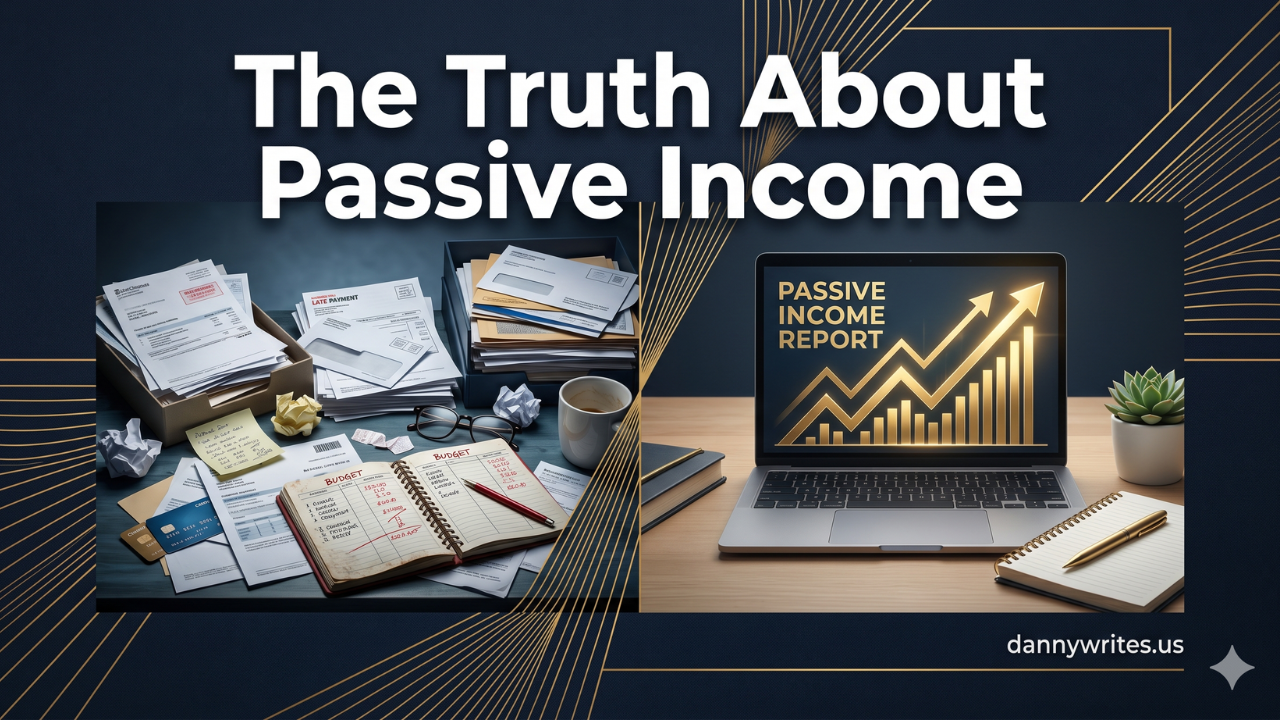
The Passive Income Myth — And the Reality Behind It
Living in California, I’ve watched the passive income conversation evolve from a niche financial concept into a cultural phenomenon. From coffee shop conversations in San Jose to viral TikTok videos promising financial freedom in 30 days, the idea that money can work for you while you sleep has captured the imagination of an entire generation of Americans.
But here’s what most of those viral videos won’t tell you: the vast majority of passive income strategies require either significant upfront capital, substantial time investment, or both. The word “passive” is doing a lot of heavy lifting in an industry built largely on selling courses about how to sell courses.
That doesn’t mean passive income is a myth. It means the definition needs recalibrating. In 2026, genuine passive income streams do exist — but they look different from what most influencers are selling. This article cuts through the noise to identify what actually works, what doesn’t, and how to build a realistic strategy for generating income that doesn’t require your constant attention.
In this post, I’m going to walk you through exactly why most content creators and everyday Americans struggle to monetize effectively, what the one-click solution looks like in practice, and how you can implement it starting today — regardless of how big or small your audience or savings account currently is.
Why 2026 Is a Pivotal Year for Passive Income
Several macroeconomic forces have converged to make the passive income conversation more urgent — and more complex — than ever before.
Interest rates and the savings account renaissance
After years of near-zero interest rates, high-yield savings accounts and money market funds are once again generating meaningful returns. In 2026, many Americans can earn 4–5% annually simply by parking cash in the right account. This isn’t glamorous, but it’s genuinely passive — and it’s a reminder that sometimes the boring strategies are the most reliable ones.
The creator economy’s maturation
The content creator landscape has matured significantly. Platforms have evolved, monetization tools have expanded, and the bar for what constitutes “good content” has risen considerably. This is both a challenge and an opportunity: harder to break in, but more sustainable once established.
AI’s disruption of digital income streams
Artificial intelligence has fundamentally disrupted several previously reliable passive income models. Stock photo sales, generic blog content, and basic template design are facing real pressure from AI-generated alternatives. Meanwhile, AI has opened new doors for creators who know how to use it strategically.
Key insight: The passive income strategies that thrive in 2026 share one common trait — they leverage existing assets (money, content, skills, or audiences) rather than requiring the creation of something entirely new from scratch every month.
Explore books, tools, and resources that support your financial journey — all curated on the Danny Writes Amazon storefront.
What Actually Works: The Tier System
Not all passive income strategies are created equal. Based on real market data and the experiences of thousands of Americans who have built genuine secondary income streams, here’s how the most common strategies rank in 2026.
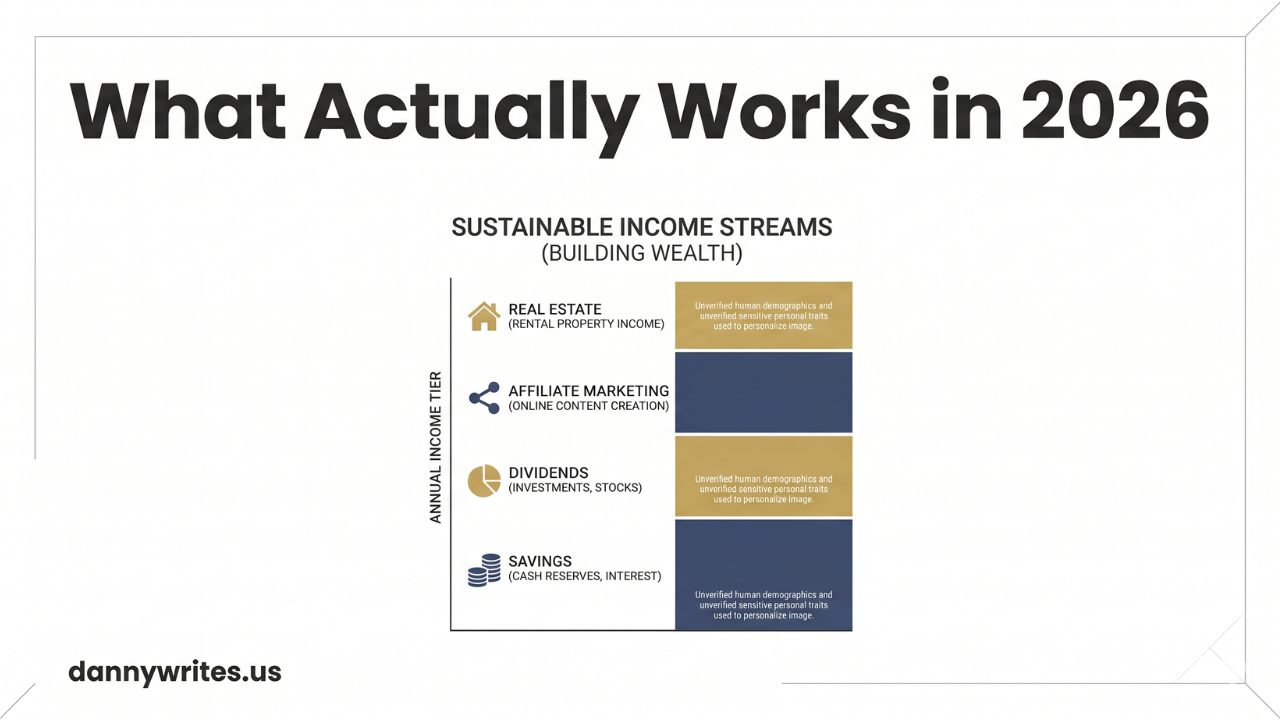
Tier 1: High reliability, lower barrier
- High-yield savings accounts and CDs: Genuinely passive, FDIC-insured, and currently offering competitive returns. The ideal foundation for any passive income strategy.
- Dividend index funds: Investing in broad market ETFs that distribute dividends quarterly. Requires upfront capital but minimal ongoing management. Historically one of the most reliable long-term wealth builders in the US market.
- Treasury bonds and I-bonds: Backed by the US government, these offer predictable returns with virtually zero risk of default.
Tier 2: Strong potential, meaningful upfront investment
- Affiliate marketing through content: Building a blog, YouTube channel, or niche website that earns commissions on product recommendations. Takes 12–24 months to gain meaningful traction, but scales well once established.
- Rental income from real estate: Traditional rental properties remain one of the most proven passive income vehicles in America. The barrier to entry is high, but the income is predictable and the asset appreciates over time.
- Digital products: E-books, templates, courses, and printables created once and sold repeatedly. Requires significant upfront creation time but can generate ongoing revenue with minimal maintenance.
Tier 3: High effort, unpredictable returns
- Dropshipping: Heavily saturated and increasingly difficult to make profitable. Platform fees, customer service demands, and thin margins make this far less passive than advertised.
- Print-on-demand: Lower barrier than traditional e-commerce, but equally saturated. Success requires strong design skills and significant marketing effort.
- Peer-to-peer lending: Higher risk than most passive income sources, with default rates that can significantly erode returns.
The Affiliate Marketing Deep Dive: Why Content Is King in 2026
Of all the digital passive income strategies available in 2026, affiliate marketing through owned content remains one of the most scalable and sustainable. Here’s why it works when so many other digital strategies don’t.
The core mechanic is straightforward: you create content that your audience trusts, and when that audience purchases products you recommend, you earn a commission. The “passive” element kicks in because content — once created and indexed — continues attracting readers and generating clicks long after you’ve moved on to the next piece.
A blog post written today about the best home office equipment can generate affiliate commissions for years. A YouTube video reviewing a popular product can accumulate views — and commission-generating clicks — indefinitely. This is the compounding nature of content-based affiliate income, and it’s genuinely one of the most powerful passive income mechanisms available to everyday Americans without significant capital.
The storefront model: a smarter approach
One evolution in affiliate marketing that’s gained traction in 2026 is the curated storefront model. Rather than linking individual products in every piece of content, creators build a branded storefront on platforms like Amazon that houses all their recommendations in one place. Every piece of content points to the same destination — and readers who trust the creator’s recommendations often browse and purchase items beyond what was specifically mentioned.
According to the Performance Marketing Association, affiliate marketing spending in the US exceeded $10 billion in 2025, with content-driven affiliate programs consistently outperforming paid advertising in conversion rates and customer lifetime value.
Books, planners, and financial tools recommended by Danny — all in one curated Amazon storefront.
The Dividend Investing Reality Check
For Americans with capital to deploy, dividend investing remains one of the cleanest passive income strategies available. But the reality is more nuanced than most financial influencers suggest.
To generate $1,000 per month in dividend income — a commonly cited “financial freedom” benchmark — you typically need between $300,000 and $400,000 invested at a 3–4% dividend yield. That’s a significant capital requirement that puts this strategy out of reach for many Americans in the short term.
The more realistic approach for most people is to treat dividend investing as a long-term compounding strategy rather than an immediate income source. Reinvesting dividends over 20–30 years is one of the most reliable paths to genuine financial independence that American history has ever produced.
REITs: Real estate exposure without the landlord headaches
Real Estate Investment Trusts offer an accessible middle ground for Americans who want real estate income without the capital requirements or management demands of physical property. REITs are legally required to distribute at least 90% of taxable income to shareholders, making them one of the highest-yielding asset classes in the US market. In 2026, data center REITs and healthcare facility REITs are attracting particular attention from income-focused investors.
Building Your Personal Passive Income Stack

The most financially resilient Americans in 2026 aren’t relying on a single passive income stream. They’re building what financial planners increasingly call an “income stack” — a diversified collection of revenue sources that complement each other and hedge against individual failures.
- Foundation layer: High-yield savings account or money market fund for liquidity and baseline returns
- Growth layer: Broad market index funds and dividend ETFs for long-term compounding
- Income layer: REITs or rental income for regular cash distributions
- Digital layer: Content-based affiliate income or digital product sales for scalable online revenue
Each layer serves a different purpose. Together, they create a system that generates income through multiple channels, reducing the risk that any single disruption — a market downturn, a platform algorithm change, a rate cut — derails the entire strategy.
The Honest Conclusion: Passive Income Is Real, But It’s Not Free
After years of watching passive income trends come and go, the honest conclusion is this: genuinely passive income always costs something upfront. It costs capital, or it costs time, or it costs the consistent effort required to build an audience or a content library. Anyone telling you otherwise is almost certainly selling something.
But here’s the encouraging flip side: for Americans willing to make that upfront investment — whether it’s $10,000 in an index fund, 12 months building a niche blog, or simply moving their savings to a high-yield account — the rewards are real, measurable, and genuinely life-changing over time.
The goal isn’t to replace your income overnight. The goal is to build a system where your money and your content work alongside you — so that over time, the gap between what you earn and what you need gradually closes on its own.
That’s what passive income actually looks like in 2026. Not a shortcut. A strategy.
💡 Frequently Asked Questions (FAQ)
Q1. Is passive income actually achievable without significant starting capital?
Yes — but the tradeoff is time rather than money. Content-based strategies like affiliate blogging or YouTube require minimal upfront financial investment but demand consistent effort over 12–24 months before generating meaningful returns. The capital-light path is real, but it isn’t fast.
Q2. How has AI changed the passive income landscape in 2026?
AI has disrupted low-skill digital income streams — generic content, basic stock images, and simple templates face intense competition from AI-generated alternatives. However, AI has also lowered the barrier for creators to produce higher-quality content faster. The winners in 2026 are those who use AI as a production tool while maintaining a genuine human perspective and audience trust.
Q3. What is the single most reliable passive income strategy for the average American in 2026?
For those with capital, a diversified portfolio of broad market index funds with dividend reinvestment remains the most historically reliable wealth-building strategy. For those starting without capital, content-based affiliate marketing — particularly through a curated Amazon storefront model — offers the most scalable path to genuine passive digital income with minimal ongoing maintenance.
Affiliate Marketing
Dividend Investing
Personal Finance 2026
Financial Independence
🌿 Weekly wellness, health & beauty insights — straight to your inbox
Free subscription · Cancel anytime


I’m often to blogging and i really appreciate your content. The article has actually peaks my interest. I’m going to bookmark your web site and maintain checking for brand spanking new information.
Thanks!