5 AI-Powered Side Hustles That Are Quietly Building Real Passive Income in 2026
Talk of “passive income” used to mean rental property or dividend-paying stocks — things that required either capital or patience most people didn’t have. That’s changed faster than most economic commentators expected. Here in Denver, I’ve watched neighbors go from posting AI-assisted recipe videos as a hobby to running small but genuinely profitable online stores within a single year, not because they discovered some secret shortcut, but because AI quietly removed several of the slowest, most expensive bottlenecks that used to keep ordinary people out of these markets.
This isn’t a hype piece. It’s a breakdown of five AI-powered side hustles that are realistic for a working American with limited time, looking at what they actually require, what they pay, and how to decide which one fits your situation.
Why AI Is Reshaping the American Side Hustle Economy
Multiple recent surveys, including ones from Bankrate and LendingTree, have found that roughly a third of working Americans report having some form of side income — a number that has held steady or grown slightly over the past few years. What’s new isn’t the desire for extra income; it’s the entry cost. Writing, design, video editing, market research, and basic financial analysis used to require either money to hire help or hours most people didn’t have after a full-time job. AI tools have compressed that cost dramatically, which is the real reason this trend has accelerated rather than faded after the initial hype cycle.
That said, “AI-powered” does not mean “effortless.” Every hustle below still requires a real time investment up front. What AI changes is how much that investment pays off per hour.
1. Turn AI Content Into Income
How It Works
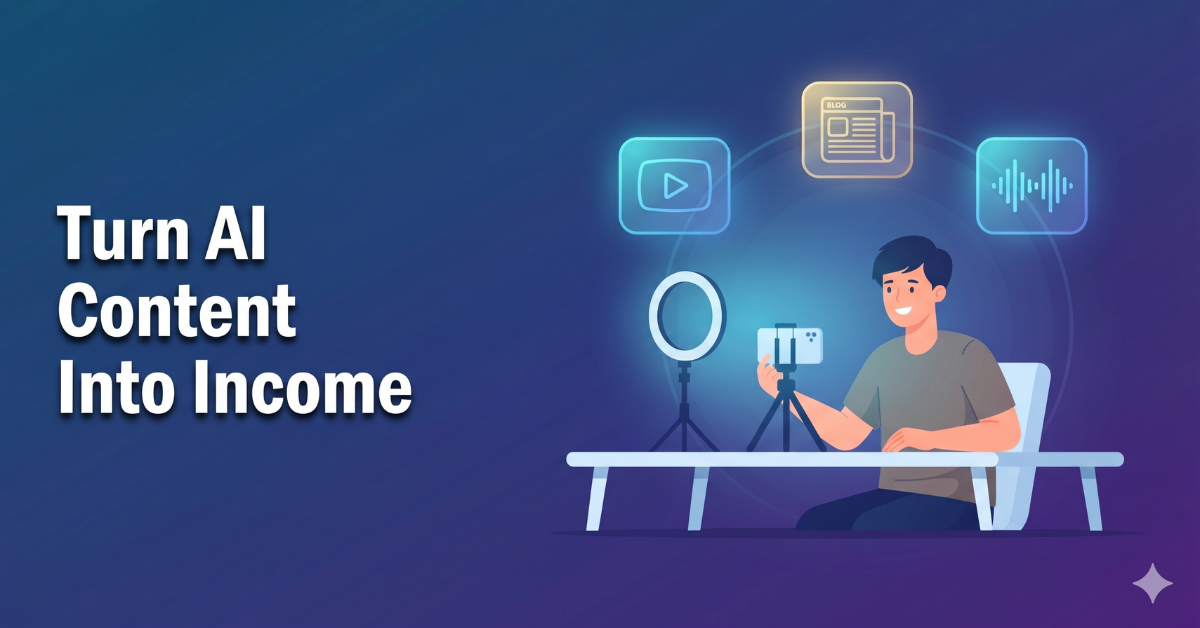
YouTube, blogging, and short-form video still reward consistency over talent. AI tools now handle the parts that used to eat the most time: scripting, thumbnail design, editing, and research. The creator’s job shifts from “doing everything” to “directing everything,” which means one person can realistically run a content channel that would have required a small team five years ago.
A Realistic Example
Consider a creator who started a niche YouTube channel covering home automation reviews. Using AI for script outlines, voiceover cleanup, and thumbnail variations, they cut their production time per video from roughly six hours to under two. At a modest 800-subscriber stage with a few thousand monthly watch hours, ad revenue alone is small — but affiliate links to the products reviewed often outpace ad income by a factor of three or four, which is the part most beginners underestimate.
Quick-Start Checklist
- Pick one narrow niche you can talk about for 50+ videos or posts without running out of ideas
- Use AI only to draft and edit — keep your own voice in the final pass so content doesn’t sound generic
- Track which single piece of content brings the most watch time or traffic, then make more like it
- Add affiliate links or a simple digital product before chasing ad revenue; it monetizes far earlier
2. Run an AI-Automated Online Store
Print-on-Demand and Dropshipping, Reinvented by AI
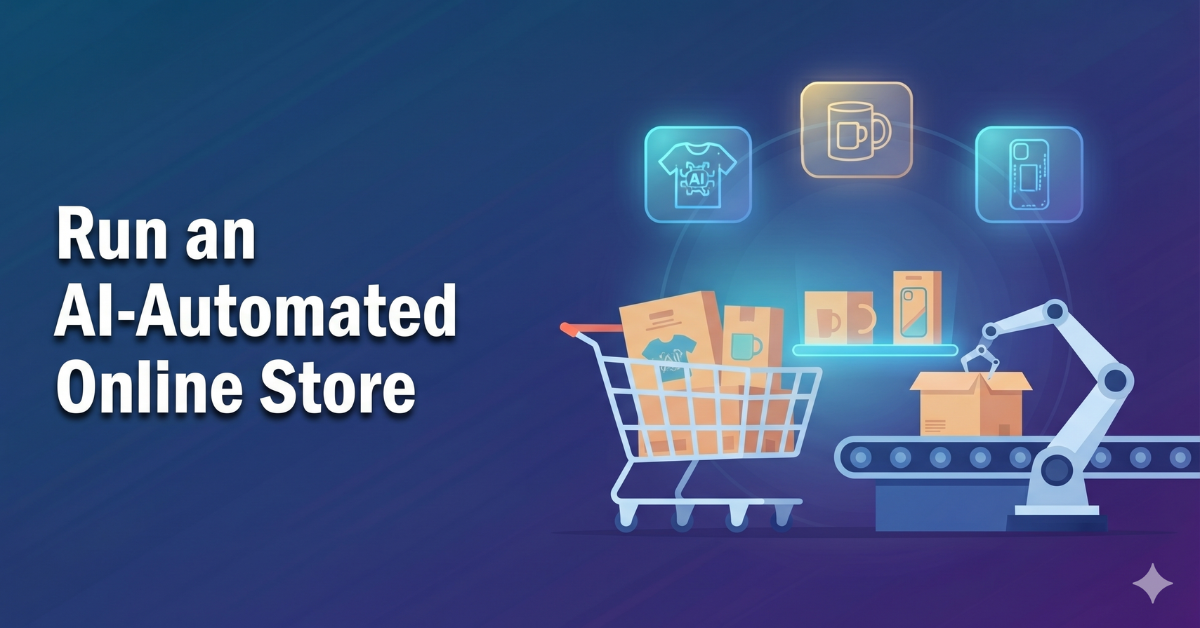
Print-on-demand stores have existed for over a decade, but the design bottleneck used to make them slow to scale. AI image-generation tools now let a single operator produce dozens of original product designs in an afternoon — apparel, mugs, wall art, phone cases — and test which ones actually sell before investing further. The product research side has shifted too: AI tools can scan trending search terms and existing marketplace listings to flag underserved niches faster than manual research ever could.
A Realistic Example
A part-time seller running a pet-themed print-on-demand store used AI to generate over 40 design variations in a single weekend, then let real sales data — not personal taste — decide which five to push with paid ads. Within three months, those five designs accounted for more than 70% of total store revenue, a pattern that shows up constantly in this business model: a small number of winners carry the store, and AI’s real value is helping you find them faster and cheaper.
Getting Started
- Start with one product type (shirts or mugs) rather than a general store — niche stores convert better
- Generate a batch of designs, but only commit ad budget to the top performers after real data comes in
- Use a print-on-demand platform with US-based fulfillment to keep shipping times competitive
Turning a Side Hustle Into a Real Business?
Most successful AI side hustles eventually outgrow a one-person operation. Hiring a freelance designer, video editor, or virtual assistant on Fiverr is often the fastest way to scale your content or store into something that runs without you doing every single task yourself.
3. Automate Freelance Work With AI
AI as a Force Multiplier, Not a Replacement
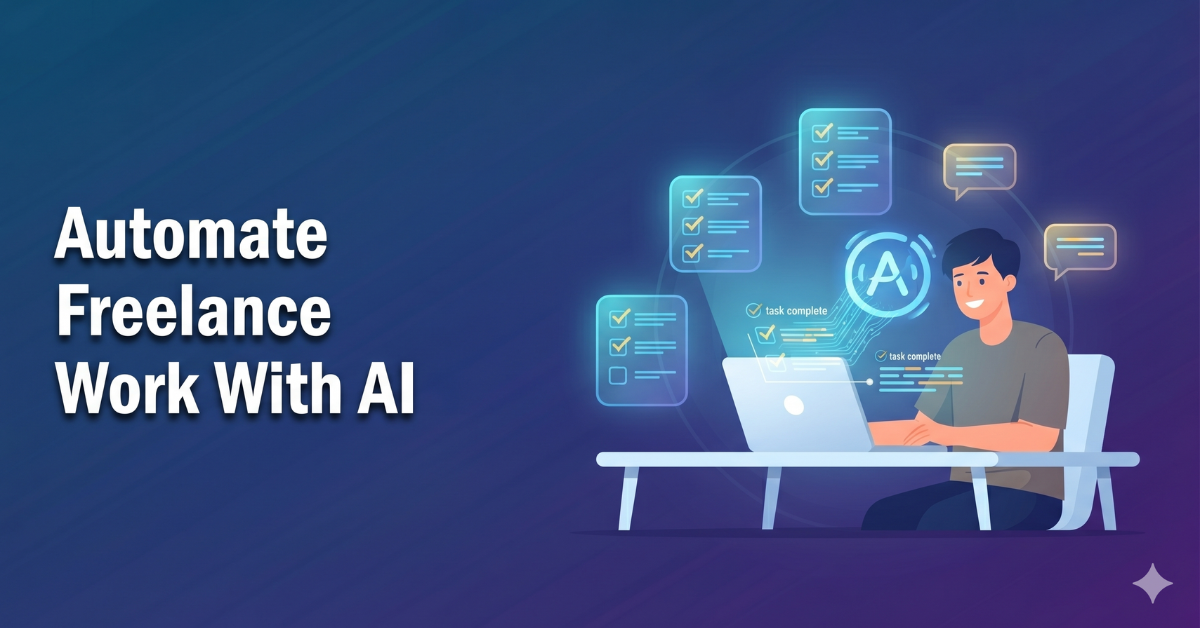
Freelance writers, designers, and consultants who use AI well aren’t competing on speed alone — clients still pay for judgment, taste, and accountability. What’s changed is volume. A freelance copywriter who used to take on four clients a month can often handle eight or nine now, because AI handles first drafts, research summaries, and formatting, leaving the freelancer to focus on editing, strategy, and client communication — the parts that are hardest to automate and the parts clients actually value most.
Where to Find Clients
Freelance marketplaces remain the fastest on-ramp for beginners, while direct outreach and referrals tend to produce higher-paying repeat clients once a portfolio exists. A common, realistic path is starting on a marketplace to build two or three solid testimonials, then shifting toward direct client relationships within six months as reputation builds.
Pricing Smart
- Price for the outcome you deliver, not the hours AI saves you — clients pay for results, not your process
- Raise rates every 3-4 new clients once your calendar starts filling consistently
- Keep a swipe file of your best AI-assisted drafts to speed up future projects in the same niche
4. Automate Investing With AI
Robo-Advisors and Algorithmic Tools
Robo-advisors aren’t new, but AI-driven portfolio tools have gotten meaningfully better at tax-loss harvesting, rebalancing, and flagging unusual market conditions — tasks that used to require a human advisor checking accounts manually. For everyday investors, this mostly shows up as small, compounding efficiency gains rather than dramatic outperformance, which is a more honest description than most marketing around “AI investing” tends to offer.
What AI Can’t Do
No AI tool reliably predicts short-term market movements, and any service implying otherwise deserves skepticism. The realistic value of AI in investing is automation and discipline — automatic rebalancing, automatic contributions, automatic tax efficiency — not stock-picking magic. Treat AI investing tools as a way to remove your own emotional decision-making from the process, not as a shortcut to outsized returns.
Every Side Hustle Needs a Home Base
Whether you’re building a content channel, a store, or a freelance brand, you eventually need a website you fully own — not just a social profile that can be deplatformed. Bluehost makes it simple to launch a professional WordPress site in minutes, even with zero coding experience.
5. Build Passive Income With AI Automation Workflows
No-Code Automation Meets AI APIs
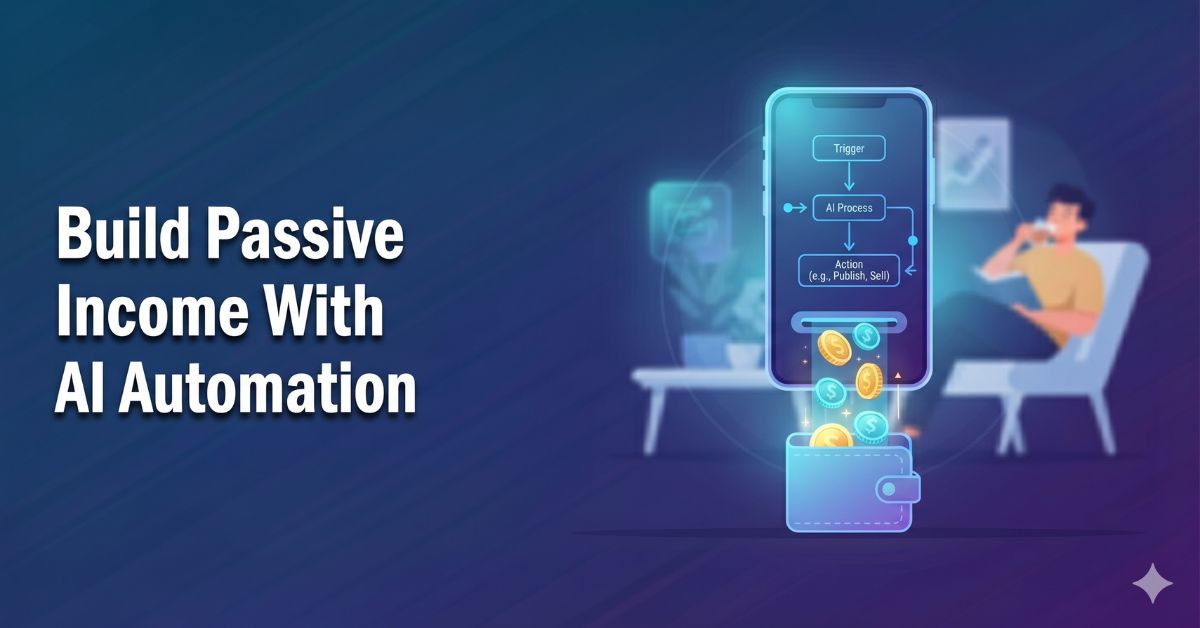
The closest thing to genuinely passive AI income right now is automation workflows that connect tools like Zapier or Make to AI models, running tasks without anyone touching them daily. Examples include auto-generating and scheduling social posts from a single weekly input, auto-summarizing industry news into a paid newsletter, or running a simple AI chatbot that qualifies leads for a service business overnight.
Examples Worth Studying
One small operator built a workflow that scrapes public job listings in a specific industry, uses AI to summarize and tag them, and emails a curated daily digest to a paid subscriber list — fewer than 200 subscribers at $9/month, running almost entirely on autopilot after the initial three weeks of setup. It’s not life-changing money, but it’s a clear example of the “build once, earn repeatedly” pattern that defines real passive income, as opposed to side hustles that still require daily hands-on work.
- Pick one repetitive task you already do manually and automate just that one thing first
- Test the workflow on yourself for two weeks before charging anyone for access to it
- Expect a real setup investment (often 15-30 hours) before it becomes genuinely “passive”
How to Choose the Right AI Side Hustle for You
Most people fail at side hustles not because the model doesn’t work, but because they pick one that doesn’t match their actual time and risk tolerance. A quick way to narrow it down:
- Limited time, low budget: AI content creation or freelancing — both can start with free tools
- Some budget, enjoys creative work: AI-automated online store or print-on-demand
- Comfortable with markets and risk: AI-assisted investing automation as a long-term layer, not a quick win
- Technically inclined, wants true passivity: No-code AI automation workflows, accepting a longer setup phase
Working Online From Anywhere?
Side hustles often mean handling client files and financial data across public Wi-Fi at coffee shops, co-working spaces, and airports. NordVPN encrypts your connection so your business data stays private no matter where you’re working from.
Final Thoughts: Realistic Expectations for AI-Powered Income in 2026
None of these five paths are “get rich quick.” What AI has genuinely changed is the ratio of effort to output — the same hour of work now produces more usable content, more product designs, more client deliverables, and more financial efficiency than it did even two or three years ago. The people seeing real results aren’t the ones chasing every new AI tool; they’re the ones who picked one model from this list, stuck with it past the first slow month, and let AI handle the repetitive parts while they focused on the decisions only a human can make.
💡 Frequently Asked Questions (FAQ)
Can AI side hustles really generate passive income, or do they always require ongoing work?
Most AI side hustles are “semi-passive” rather than fully passive — they require real upfront effort, then drop to lighter maintenance. Content channels and stores still need occasional updates; automation workflows come closest to true passivity, but only after an honest setup investment of several weeks.
Which AI side hustle has the lowest startup cost right now?
AI-assisted content creation and freelancing both have the lowest barrier to entry, since many core AI tools have usable free tiers and neither requires upfront inventory or capital. E-commerce and investing automation typically require at least some starting budget.
How long before an AI-powered side hustle becomes meaningfully profitable?
Realistic timelines run three to twelve months depending on the model — content and freelancing often show early income within weeks but take longer to scale, while automation workflows and stores tend to need a slower data-driven testing phase before consistent profit appears.
🌿 Weekly wellness, health & beauty insights — straight to your inbox
Free subscription · Cancel anytime