Sell Digital Products with AI (2026 Playbook for Passive Income)
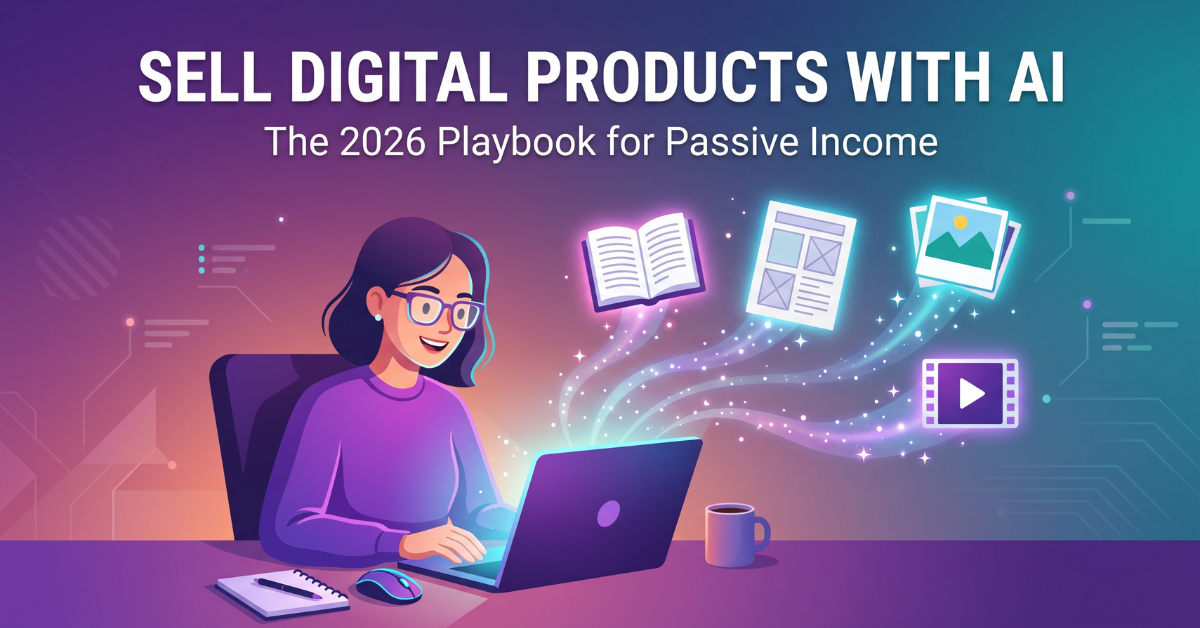
If you’ve been wondering whether you can actually sell digital products with AI and make real money from it in 2026, the short answer is yes — but not the way most “get rich quick” videos make it sound.
Affiliate Disclosure: This post contains affiliate links. If you sign up through one of them, I may earn a small commission at no extra cost to you.
A year ago I was skeptical. I’d seen the same three screenshots of “$10K/month with AI templates” recycled across every corner of the internet, and none of it explained the actual mechanics. So I spent a few months building and listing different types of AI-assisted products myself — an ebook, a set of Notion templates, a small image pack — just to see what genuinely sells versus what just looks good in a thumbnail. Some of it worked shockingly well. Some of it sat there with zero sales for weeks. Here’s what I actually learned, broken down by product type, so you can skip the trial-and-error part I went through.
💡 Before you dive in
The single biggest mistake I made early on was generating a product first and figuring out who’d buy it second. Flip that order. Pick a narrow audience with a specific, annoying problem — then use AI to build the solution.
6 Real Ways to Sell Digital Products with AI
Here’s the breakdown, category by category, based on what I actually tested.
AI-Written Ebooks & Guides
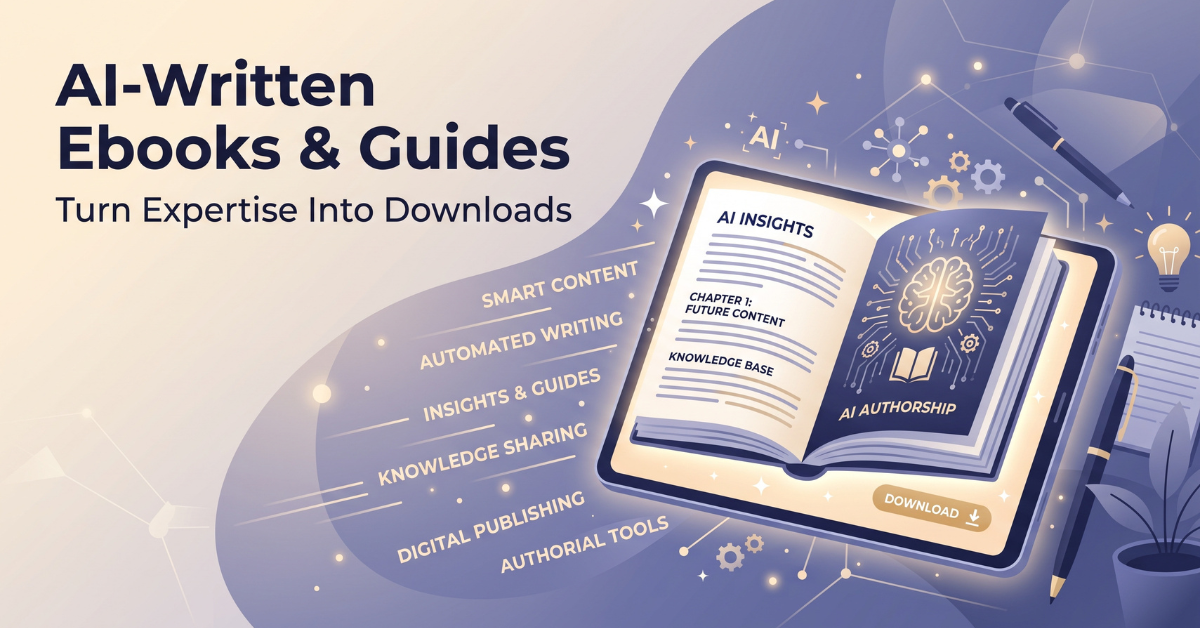
My first product was a 40-page guide on meal-prepping for people who hate cooking. I used AI for the first-draft structure and recipe formatting, then rewrote every section in my own voice and tested every recipe myself before publishing. That last part matters more than people admit — readers can tell within a page or two whether a guide came from genuine trial-and-error or from a prompt with no editing pass.
What actually sells
- Narrow, specific topics beat broad ones — “meal prep for night-shift workers” outsold a generic “healthy eating” guide by a wide margin
- Short (20-50 page) guides priced $9-$19 convert far better than 200-page “complete encyclopedias” priced $49+
- A real cover design (not a plain text PDF) roughly doubled my click-through rate on the sales page
AI-Built Templates & Digital Planners
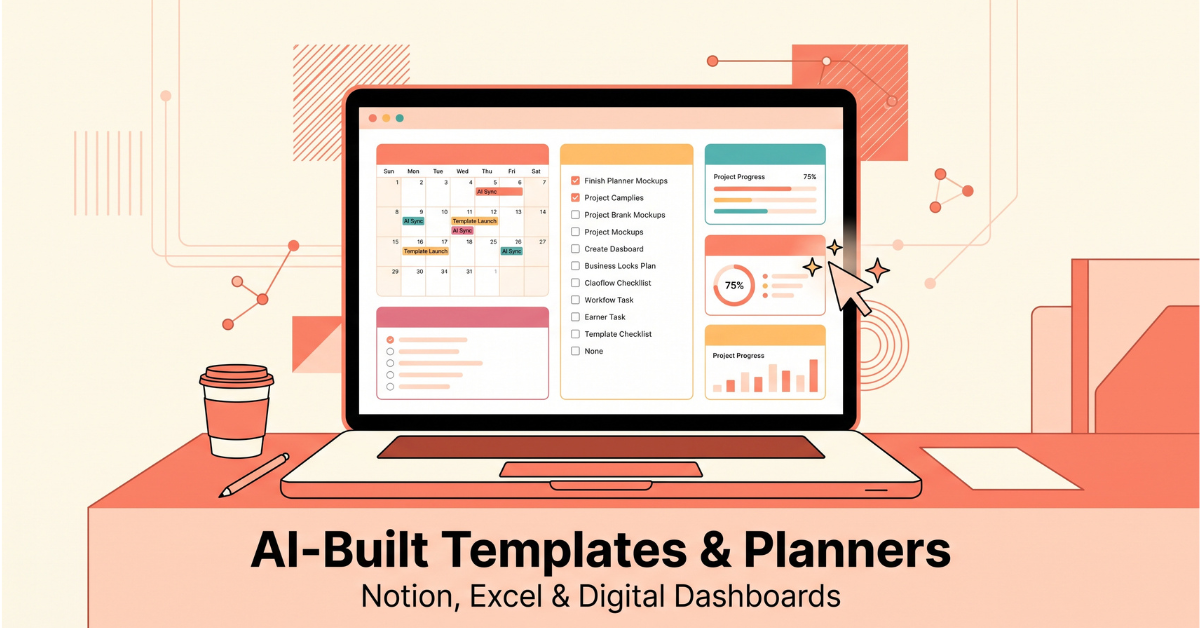
This category surprised me the most. I built a simple Notion dashboard for tracking freelance invoices — something I genuinely needed for myself — cleaned it up, wrote a short setup guide, and listed it for $14. It’s still selling a handful of copies every week, more than a year later, without me touching it.
AI is genuinely useful here for generating the formulas, database structures, and even the icon sets, but the products that sell best solve one specific workflow problem rather than trying to be an all-purpose “life organizer.” Think “quarterly tax tracker for freelancers,” not “productivity system for everyone.”
🎨 Want a step-by-step system for this exact category?
This is a full training on creating and selling AI-generated printable products using ChatGPT and Canva — includes prompts, templates, and the practical strategy I wish I’d had when I started.
See the Printable Products Training →AI Art & Image Packs
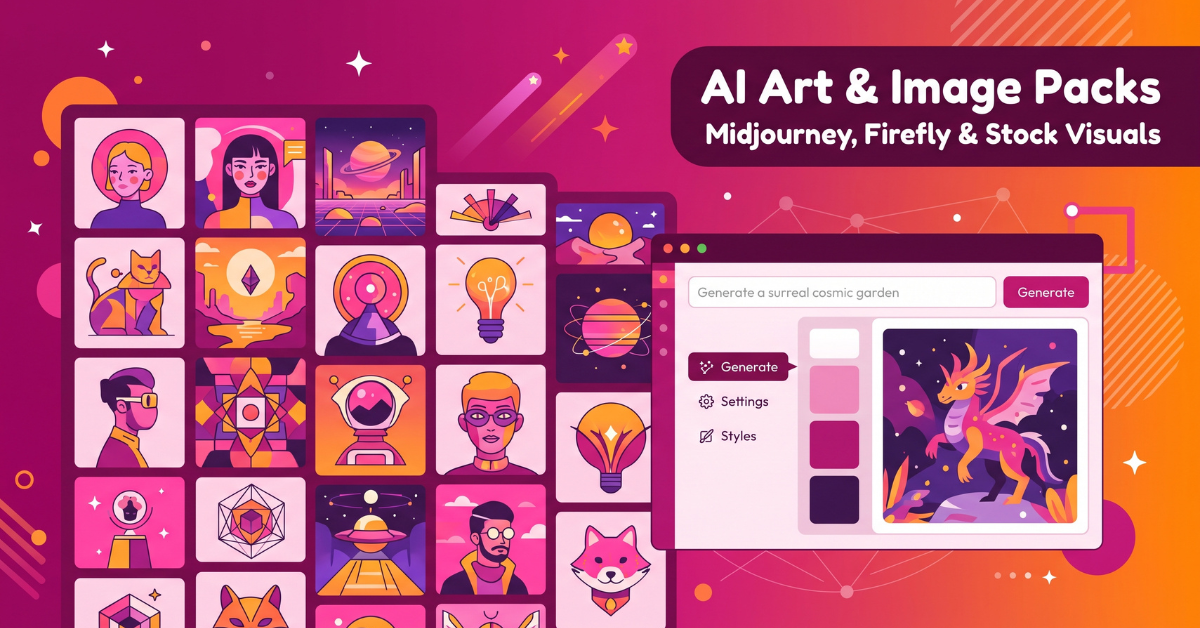
This is the category where licensing actually matters, so I’ll say it plainly: read the terms of whichever AI image tool you use before you sell anything made with it. Some tools allow commercial use of what you generate but explicitly prohibit reselling access to the tool itself — that distinction trips up a lot of first-time sellers.
Once you’ve sorted that out, themed bundles (a set of 20 seamless patterns, a pack of watercolor florals, a stock-photo-style collection for a specific niche like “cozy home office”) consistently outperform single one-off images. Buyers want a cohesive set they can use across a whole project, not a single graphic.
AI Video, Audio & Mini-Courses
Video and audio products have a higher setup cost than an ebook or a template pack, but they also command noticeably higher prices — a well-produced 45-minute mini-course can reasonably sell for $39-$79 where a similar-length ebook would struggle past $19. AI tools make the production side faster (slide generation, narration, editing), but the actual teaching still has to come from something you genuinely know.
If your digital product strategy eventually turns into offering these skills as a service to clients rather than just selling static files, the transition is smoother than most people expect — the audience overlap between “people who buy your templates” and “people who’d hire you to build one custom” is bigger than it looks.
📋 Thinking about taking on clients alongside your products?
This AI-assisted client communication kit gives you outreach scripts, follow-up messages, proposal templates, onboarding materials, and a 7-day quick-start plan — genuinely useful once you move from selling files to selling services.
Get the Client Communication Kit →AI-Designed Print-on-Demand Products
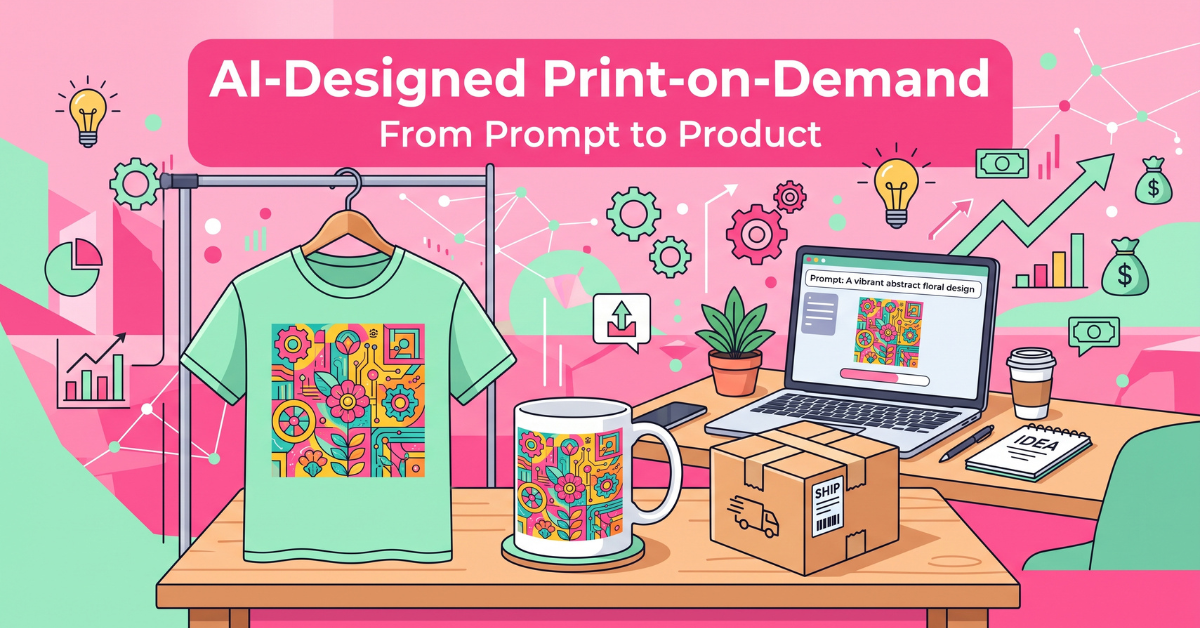
Print-on-demand sits at the intersection of digital and physical — you design once using AI, and a third party handles printing and shipping every time someone orders. Margins per item are thin, so this works as a volume game built around a specific niche audience (a hobby, a profession, an inside joke) rather than trying to appeal broadly. It’s also one of the easiest ways to test whether a design concept resonates before investing more time into a bigger product built around the same theme.
Where to Actually Sell These Products
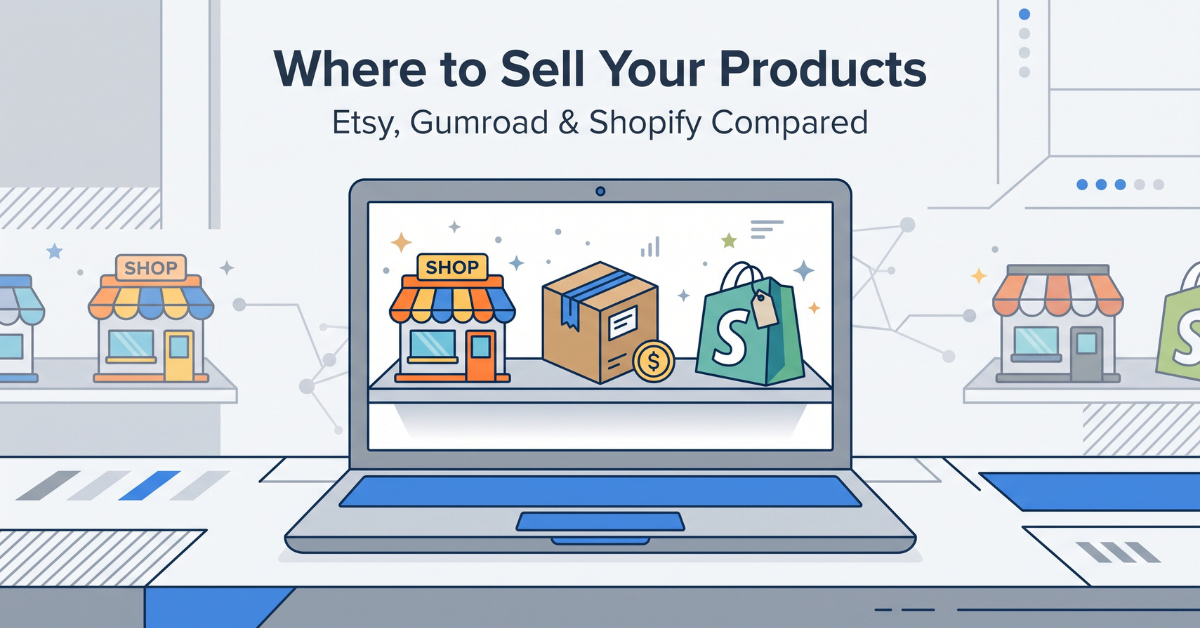
Platform choice matters more than most guides admit when you sell digital products with AI. Marketplaces with built-in traffic (like Etsy) get you sales faster but take a cut and put you in direct price competition with everyone else in your category. Standalone tools built for creators (like Gumroad) give you better margins and full control of pricing, but you have to bring your own audience — usually through a blog, newsletter, or social following.
- Marketplace-first (built-in traffic, lower margin): best for templates, printables, and art packs with broad appeal
- Creator platform (higher margin, you bring the audience): best once you have any kind of following, even a small one
- Your own site: best long-term if you’re building a brand, since you keep 100% of the revenue and own the customer relationship
🔒 A quick note before you start listing products anywhere
Selling online means your payment info, login credentials, and customer data are moving across public Wi-Fi more often than you’d think — especially if you’re managing listings from a coffee shop or while traveling. With data breaches costing sellers real money and time, a VPN is one of those unglamorous habits that’s genuinely worth building early.
Protect Your Seller Account →Beyond Products: Selling the AI Tools Themselves
One thing I didn’t expect: a decent chunk of my income now comes not from the products themselves, but from other creators and small business owners who want the AI apps and workflows I use for their own blog or site, and would rather pay someone to set it up than learn it from scratch. If you’ve built any kind of AI-assisted workflow for yourself, there’s very likely a market for packaging or reselling that setup to people who want the result without the learning curve.
🤖 Have an AI tool or workflow worth sharing?
A lot of creators want ready-made AI apps for their own blog or site and would rather buy access than build it themselves — this is where you can turn that demand into steady commission income.
Explore This Opportunity →Which Digital Product Earns the Most?
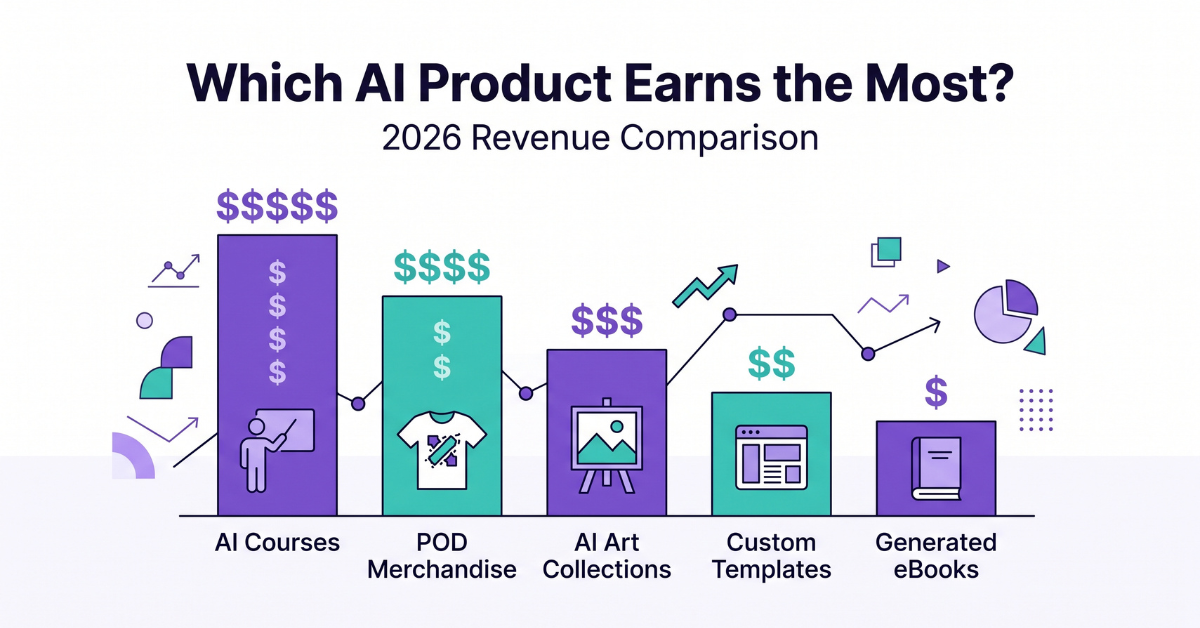
Ranked purely by realistic revenue per hour of upfront work, video/audio mini-courses and client-facing service packages sit at the top once you have any audience at all. Templates and planners are the best “build once, sell for years” option with the lowest ongoing effort. Ebooks and printables are the fastest to launch if you’re starting from zero and want your first sale within a week or two. Print-on-demand is the easiest way to test a niche cheaply before committing more time to a bigger product built around the same audience.
My honest advice: start with whichever category matches something you already know well, not whichever one looks the most profitable in someone else’s screenshot. When you sell digital products with AI, the ones that actually sell long-term are built on real expertise that AI helped you produce faster — not the ones where AI did the thinking for you.
💡 Frequently Asked Questions (FAQ)
Q1: Is it legal to sell digital products I created with AI tools?
Generally yes, but licensing terms vary significantly between AI tools. Some explicitly allow commercial resale of generated content, others restrict it, and a few require attribution. Always check the specific terms of service for the tool you used before listing a product for sale.
Q2: Do I need a large audience before I can sell digital products with AI?
No. Marketplaces with built-in traffic, like Etsy, let you make sales without any existing following. An audience helps most once you move to a creator platform or your own site, where margins are higher but you’re responsible for bringing your own visitors.
Q3: Which digital product category is easiest for a complete beginner?
Printables and templates. They require the least production time, the smallest learning curve, and can realistically go from idea to your first listing within a weekend, making them the fastest way to test whether a niche has buyers before investing in a bigger product.
🌿 Weekly wellness, health & beauty insights — straight to your inbox
Free subscription · Cancel anytime