Yes, you can make money blogging with low traffic, and I mean real money, not the $1.37 AdSense payout that takes eleven months to reach the payment threshold. Living in San Jose, I’m surrounded by people who talk about “scale” like it’s oxygen. Every startup pitch here starts with millions of users. But I’ve watched friends earn rent money from blogs that get fewer visitors in a month than a single Caltrain car carries during rush hour.
So how do they do it? They stopped playing the traffic game and started playing the value-per-visitor game. That shift is the whole article in one sentence. The rest of this guide is the “how”: the numbers, the business models, the exact pages to write and a 90-day plan you can start this week.
If your analytics dashboard shows 487 visitors last month and you’ve been quietly wondering whether to quit, stay with me. Small can be profitable. You just have to build differently.
- Why display ads fail small blogs (with 2026 ad-network thresholds)
- The “revenue per visitor” math that changes everything
- Five business models that work under 500 monthly visitors
- How to turn one blog post into traffic from Pinterest, YouTube and email
- A realistic 90-day action plan
Why Ads Fail Small Blogs: Intent Beats Traffic
Most beginner blogging advice is quietly built on one business model: display advertising. Write a lot, rank a lot, put ads on everything, collect a check. That model is real. It just doesn’t work at your size.
Here’s why. Ads pay per thousand pageviews, a figure called RPM (revenue per mille). Even when RPMs look healthy, a thousand pageviews is a lot for a young blog. And the better-paying ad networks won’t even let you in until you reach their minimums.
Ad network entry requirements (as of November 2026)
| Ad network | Reported entry requirement | Realistic for a 500-visitor blog? |
|---|---|---|
| Google AdSense | No traffic minimum (approval still required) | Yes, but earnings are tiny |
| Journey by Mediavine | About 1,000 monthly sessions (lowered in January 2026) | Not yet, but within reach |
| Raptive | About 25,000 monthly pageviews | No |
| Mediavine (main program) | Revenue-based, around $5,000 in annual ad revenue | No |
| Ezoic (new publishers) | Reportedly 250,000+ monthly users since February 2026 | No |
Requirements change often and networks also review traffic quality, so check each network’s own page before you apply.
Now let’s do some quick back-of-the-napkin math. Say your 500 visitors each read about 1.5 pages. That’s 750 pageviews. If AdSense pays you a few dollars per thousand pageviews (common for many niches), you’re looking at roughly two or three dollars a month. That isn’t a business. It’s a rounding error.
The number that matters: revenue per visitor
Economists love a good ratio, and here’s the one I want you to tape to your monitor:
Big blogs grow the first number. Small blogs win by growing the second. With ads, your revenue per visitor might be less than half a cent. With a well-placed affiliate recommendation, a $19 digital product or a freelance service, it can be 20 cents, a dollar or more. That’s a gap of 50x to 200x. Fifty times more efficient means you can be fifty times smaller and still earn the same.
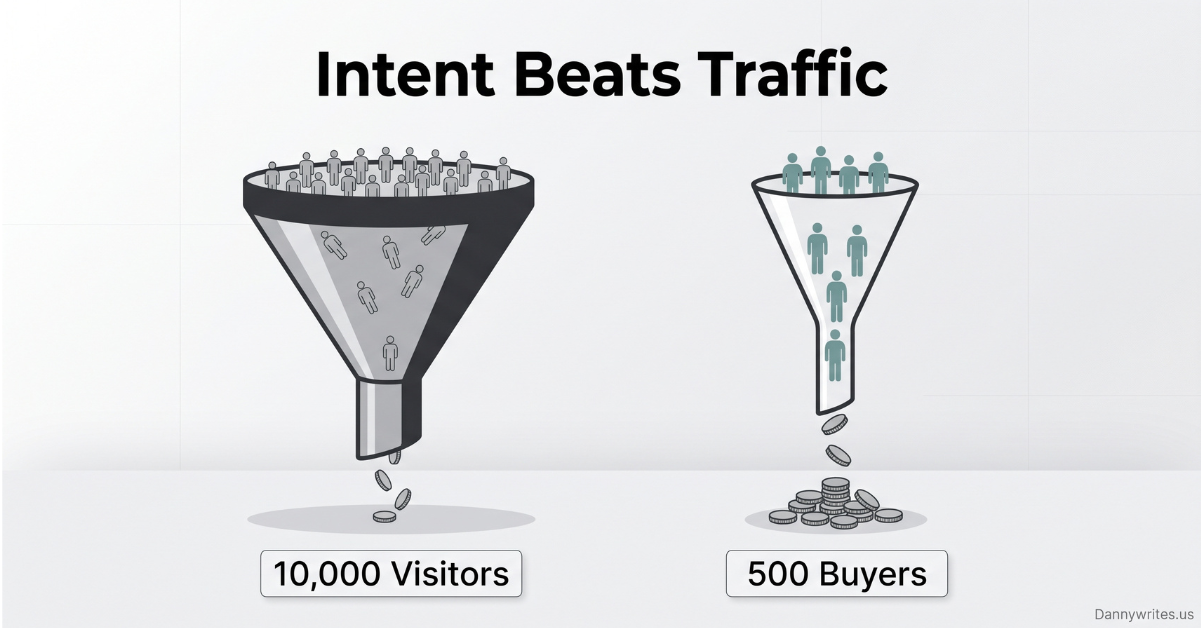
This is why I say intent beats traffic. Ten thousand people who wandered in from a random viral post are worth less than 500 people who searched “best budget email tool for a small Etsy shop.” The second group has a problem and a credit card. Your job is to be standing there with a good answer.
Sponsored Resource
Want your blog to earn while you write?
This AI-powered passive income system is built to help turn blog content into revenue, created by a well-known copywriter. Worth a look if you’d rather not build every piece from scratch.
See how it works →Model #1: High-Intent Affiliate Posts (Write for Buyers)
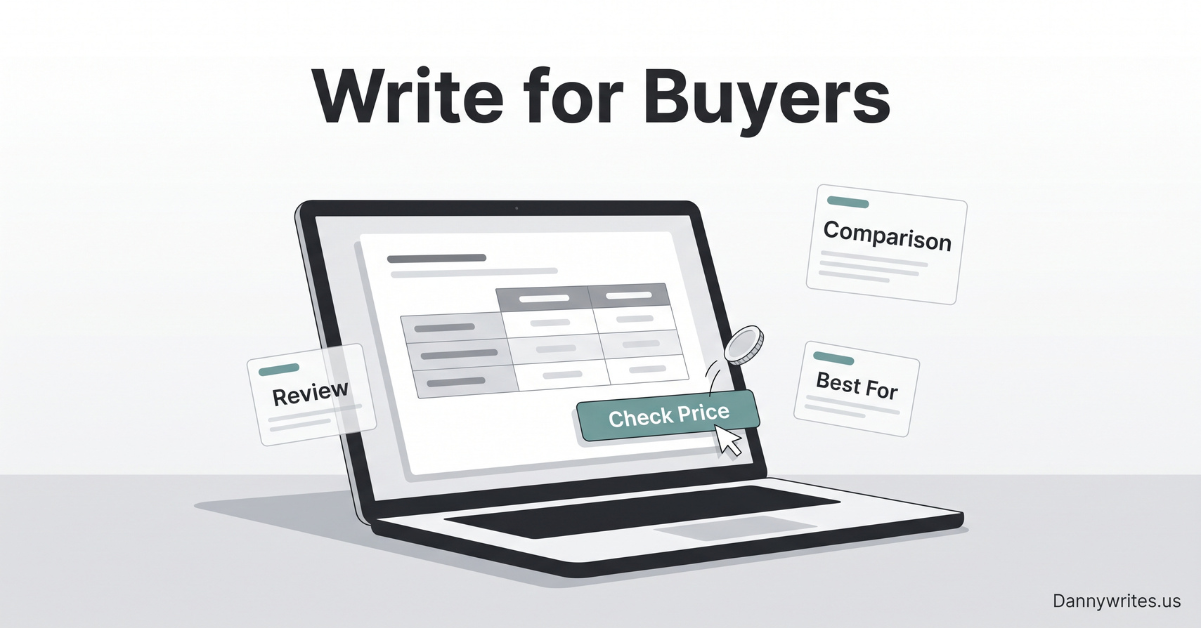
Affiliate marketing is the most natural first step if you want to make money blogging with low traffic, but only if you write the right kind of post. A post titled “10 Fun Facts About Productivity” attracts curious readers. A post titled “Notion vs. Trello for Freelance Writers: Which One I Actually Pay For” attracts people who are about to make a decision.
The four post types that convert
- Comparison posts: “X vs. Y for [specific person].” The reader has narrowed it to two choices and needs a tiebreaker.
- “Best for” posts: “Best budget microphone for beginner podcasters.” The qualifier matters more than the product.
- Honest reviews: Your real experience, including what annoyed you. Trust converts better than hype.
- Alternatives posts: “Cheaper alternatives to [popular tool].” People searching this already have buying intent and a budget problem.
Choose programs where one sale actually matters
Amazon Associates is easy to join, but its rates are thin. For most everyday categories, commissions sit in the low single digits, and Amazon reportedly cut some rates again in 2026. If you sell a $40 gadget at 3%, you earn $1.20. You’d need hundreds of sales a month to matter.
Compare that with software, online courses, digital tools and privacy apps. These often pay a much larger percentage, and some pay recurring commissions every month the customer stays. For a small blog, one sale of a $100 course at 30% to 50% equals dozens of Amazon sales.
Here’s an illustrative example. Suppose 300 of your 500 monthly visitors land on buyer-intent posts. If 10% click an affiliate link and 5% of those buy something paying a $40 commission, that’s about $60 a month from 1.5 sales. Not life-changing, but it’s twenty to thirty times what ads would pay on the same traffic. Publish ten of these posts over a year and the numbers compound.
Want a done-for-you affiliate setup?
If you’re curious about ClickBank-style affiliate marketing, this free club gives you a ready-made affiliate system, training and a follow-up process so you can earn commissions while building your email list.
Get free access →Match the product to the reader’s problem
The best affiliate products feel like a natural next step in your post, not an ad stapled to the bottom. If you write about remote work, travel or freelancing, privacy tools are a perfect example. Anyone working from a coffee shop or airport lounge on public Wi-Fi has a real reason to care about online privacy.
Write about travel, tech or remote work?
Privacy apps like NordVPN are a natural, high-intent fit for these niches. Take a look at what NordVPN offers.
Check out NordVPN →Model #2: Sell Your Own Digital Product
Affiliate income means you keep a slice. A product of your own means you keep most of the pie. That’s why I think every small blogger should have at least one inexpensive product within their first six months.
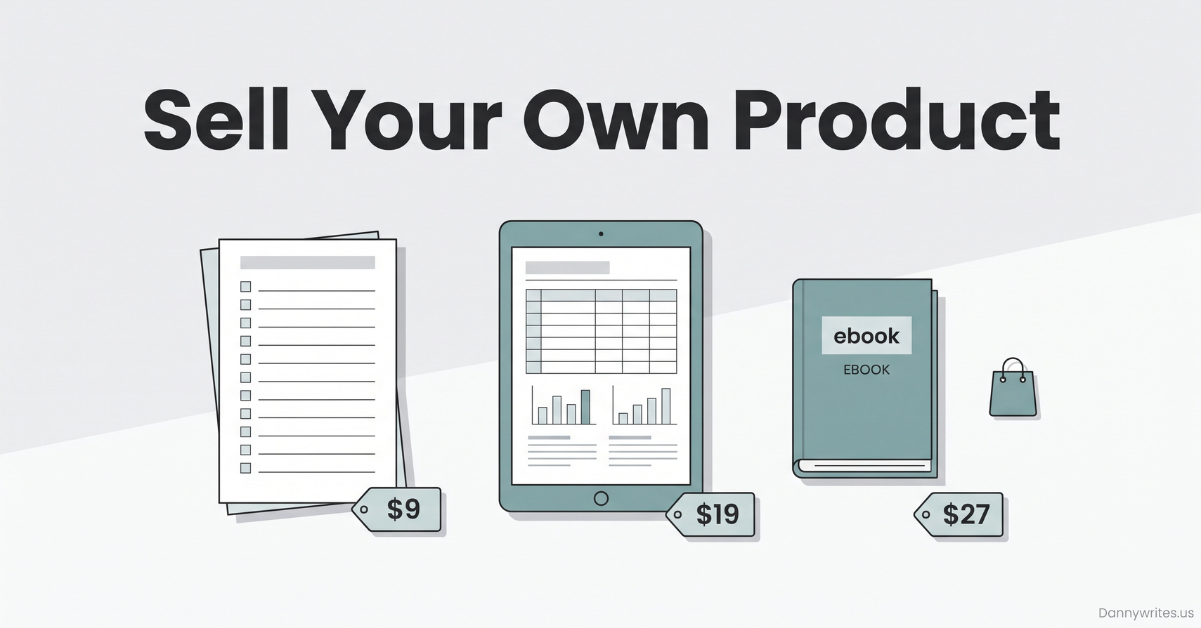
It doesn’t need to be a 40-hour course. Small, specific products sell best on small blogs because the buyer already trusts the post that brought them there:
- Templates: budget spreadsheets, content calendars, Notion dashboards
- Checklists and printables: “Move-out cleaning checklist,” “Pre-launch blog SEO checklist”
- Mini-guides: a focused 25-page PDF that solves one problem completely
- Swipe files: email templates, pitch scripts, social captions
Where to sell it (fees as of November 2026)
| Platform | Monthly cost | Transaction fee |
|---|---|---|
| Gumroad | $0 | 10% + $0.50 per direct sale, plus card processing |
| Payhip (Free / Plus / Pro) | $0 / $29 / $99 | 5% / 2% / 0%, plus card processing |
| Kit (free Newsletter plan) | $0 | Small sales fee plus processing; check Kit’s pricing page |
Fees change. Always confirm on each platform’s pricing page before launching: Gumroad pricing, Payhip pricing.
Worried you don’t have enough readers to sell anything? I walk through that exact situation in how to sell digital products online with zero audience.
For a beginner selling a few copies a month, a no-monthly-fee option is usually smarter. You only pay when you earn. Once you’re selling steadily, a paid plan with lower transaction fees starts to make sense.
Run the illustrative numbers. If 1% of your 500 visitors buy a $19 template, that’s five sales, or $95 before fees. Combine that with your affiliate income and you’re already well past what ads would pay a blog ten times your size.
How to pick your first product idea
- Open your analytics and find your top three posts by time on page.
- Read the comments and emails those posts generated. What follow-up questions keep coming up?
- Build the tool that answers the follow-up question. That’s your product.
- Link to it from inside the original post, right at the moment the reader needs it.
Sponsored Resource
Learn the business side of selling online
Creating a product is half the job. Marketing it is the other half. This e-business and e-marketing resource covers the fundamentals of selling online.
Explore the resource →Model #3: Your Blog Is Your Portfolio (Services)
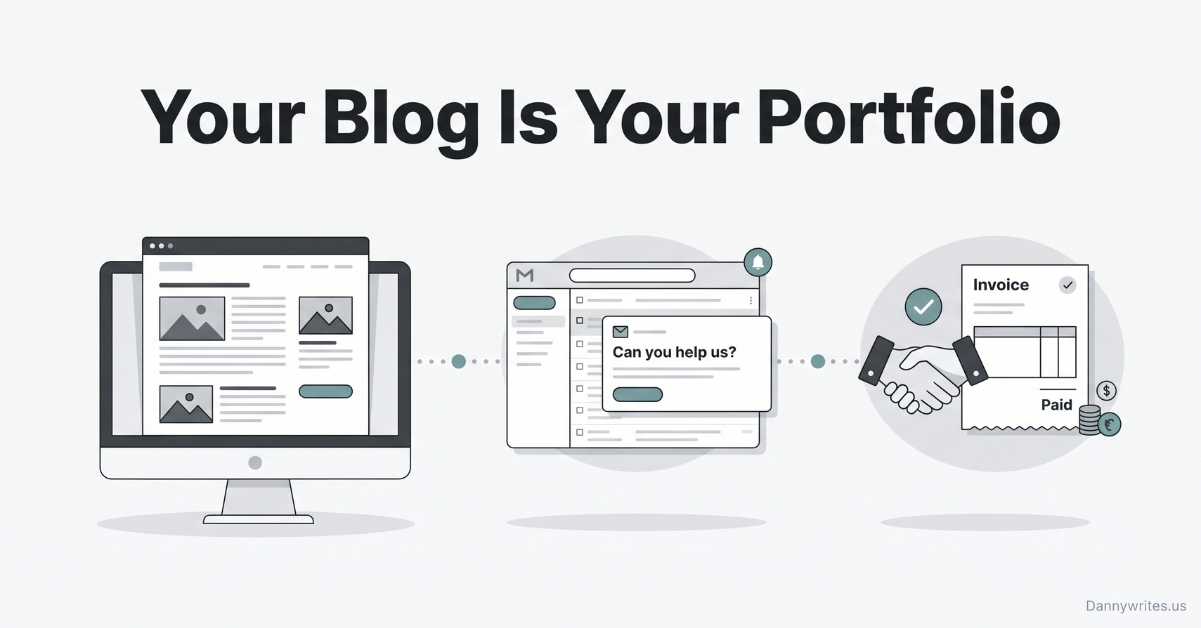
This is the model nobody talks about in “passive income” circles, because it isn’t passive. But it’s often the fastest way to make money blogging with low traffic, and here’s the reason: a single client can be worth more than a year of ad revenue.
Your blog proves you know your stuff. If you write about Pinterest marketing, a small business owner who reads three of your posts may simply email you and ask, “Can you do this for us?” One client paying $300 a month for Pinterest management is $3,600 a year. You’d need an enormous amount of ad traffic to match that.
Services that pair well with a blog
- Writing and editing (blog posts, newsletters, product descriptions)
- Social media management or Pinterest pin design
- Website setup, WordPress fixes and SEO audits
- Coaching or one-on-one consulting calls in your niche
- Video editing, thumbnails and YouTube channel setup
Starting later in your career? Years of work experience are a huge advantage here. For more ideas, see my guide to side hustles for people over 40.
Make it easy to hire you
Most bloggers bury their services. Don’t. Add a simple “Work With Me” page, link it from your menu and mention it at the end of related posts. Something like: “If you’d rather have someone set this up for you, I take on two clients a month.”
If you want buyers to find you even when they haven’t discovered your blog yet, a freelance marketplace can help. Fiverr, for instance, charges sellers a flat 20% commission on each order as of November 2026, so price your gigs with that cut in mind. The upside is that the platform brings in buyers you’d never reach on your own, and your blog posts become proof of your skills.
Turn your blogging skills into paid gigs
Fiverr is a marketplace where freelancers sell writing, design, marketing and tech services to buyers around the world. See how others package their skills.
Explore Fiverr →Model #4: Own Your Audience With an Email List
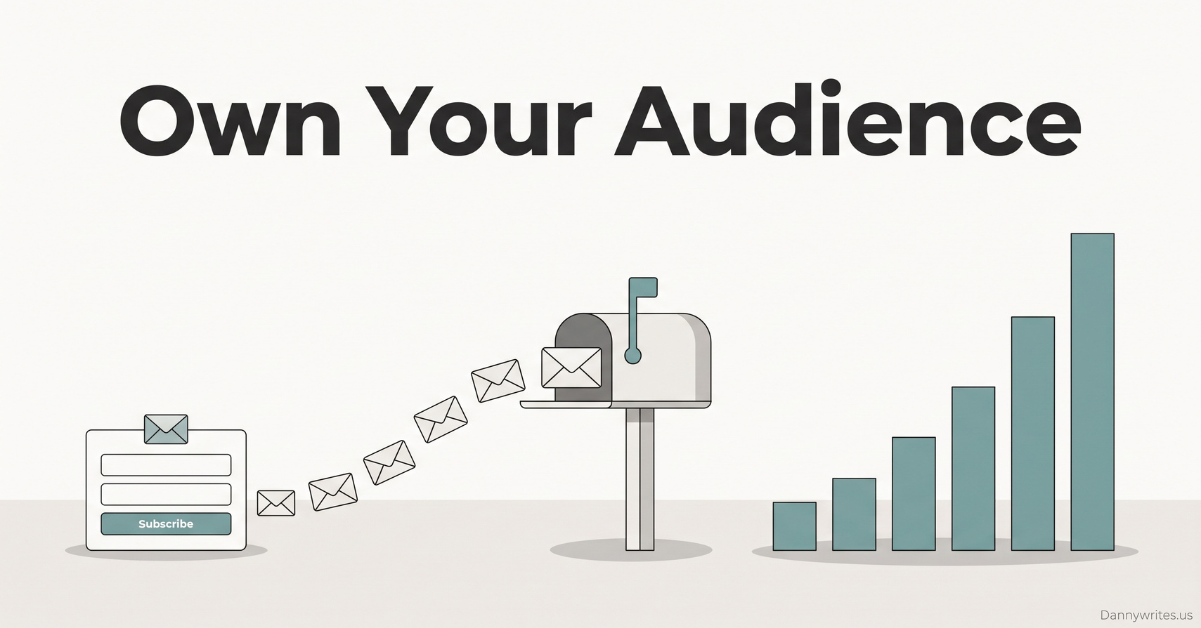
Here’s an uncomfortable truth about small blogs: most of your 500 visitors read one post and never return. Not because they didn’t like it, but because life got busy. An email list fixes that leak. It turns a one-time visitor into someone you can reach again and again, for free.
Think of it this way. Five hundred visitors a month is 6,000 a year. If just 3% join your list, that’s 180 subscribers in your first year. That doesn’t sound like much until you realize these are people who raised their hand and said, “Yes, I want more from you.” A list of 180 engaged readers can outsell a blog with 20,000 indifferent visitors.
Start free
You don’t need to spend money to start. As of November 2026, Kit’s free Newsletter plan covers up to 10,000 subscribers, though automations now sit on its paid plans, which start at around $39 a month. Other tools like MailerLite also offer free tiers with smaller limits. For a new blogger, a free plan is plenty.
Give people a reason to sign up
“Subscribe to my newsletter” converts poorly. A specific, useful freebie (called a lead magnet) converts far better. Good examples:
- A one-page checklist that summarizes your most popular post
- A short email course: “5 days to your first affiliate sale”
- A template that saves time, like a content calendar
How the list makes money
Your list becomes the engine for everything else in this article. You announce new affiliate reviews, launch your digital product, share client openings and drive traffic back to new posts. A simple rhythm works: three helpful emails for every one that sells something. Readers forgive the pitch because you’ve earned it.
Model #5: One Post, Many Channels (The Hub Strategy)
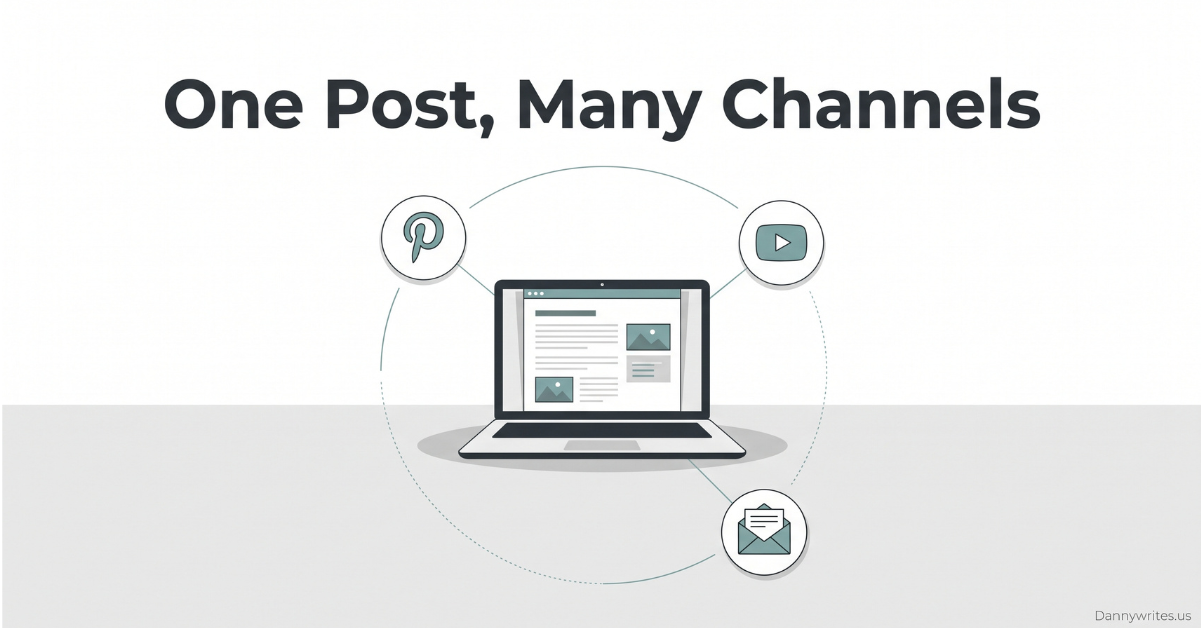
Here’s where small bloggers have a real advantage. You don’t need Google to love you on day one. You can borrow attention from platforms that already have millions of users and point it back at your blog.
I run my own work this way. Every blog post is the hub. Then I spin it into pins, a newsletter story and a video, each one linking back to the original post. One piece of research, four chances to be found.
Pinterest: the most underrated search engine
Pinterest reported 631 million monthly active users in the first quarter of 2026, and the company says a large share of searches on the platform are commercial in nature. People go there to plan purchases, projects and life changes. A tall, clear infographic pin can send traffic to your post for months or even years, which is far longer than a typical social post lives.
YouTube: turn your H2s into chapters
Your blog headings are already a video outline. Record an 8 to 10 minute walkthrough, reuse your blog images as visuals and put the full post link in the description. Short clips of your best single tip can work as Shorts.
Newsletter platforms: tell the story, link the guide
Instead of copying your post, write a short personal story about why the topic matters, share one or two key insights and send readers to the blog for the full guide. You build a subscriber base and drive traffic at the same time.
Repurpose faster with AI writing help
Turning one post into pins, captions, newsletter drafts and video scripts takes time. AI writing software can handle the first drafts so you can focus on adding your own voice and experience.
Try the AI writing tool →A word of caution: AI should speed you up, not replace you. Readers and search engines both reward first-hand experience. Use the tool for structure and repetitive formatting, then add the stories, opinions and mistakes only you can share. If you’re on a tight budget, start with these free AI tools to run a one-person online business in 2026.
Sponsored Resource
Get better at social media marketing
If you want your pins, posts and videos to actually send visitors back to your blog, this social media marketing resource is a helpful place to sharpen your skills.
Learn more →Comparing the 5 Ways to Make Money Blogging With Low Traffic
Each model has a different speed, ceiling and effort level. Here’s how they stack up for a blog under 500 monthly visitors. The earning column is a rough illustration, not a guarantee.
| Model | Time to first dollar | Startup cost | Illustrative monthly range at ~500 visitors |
|---|---|---|---|
| Display ads | Slow | $0 | A few dollars |
| Affiliate posts | 1–3 months | $0 | $20–$150 |
| Digital product | 1–2 months | $0–$29 | $50–$200 |
| Services | Fastest (weeks) | $0 | $200–$1,000+ |
| Email list | Multiplier for the others | $0 (free plans) | Boosts every model above |
My honest recommendation: start with services for fast cash, add affiliate posts for slow-building income and launch one small product by month three. Let your email list tie it all together.
Your 90-Day Plan to Start Earning
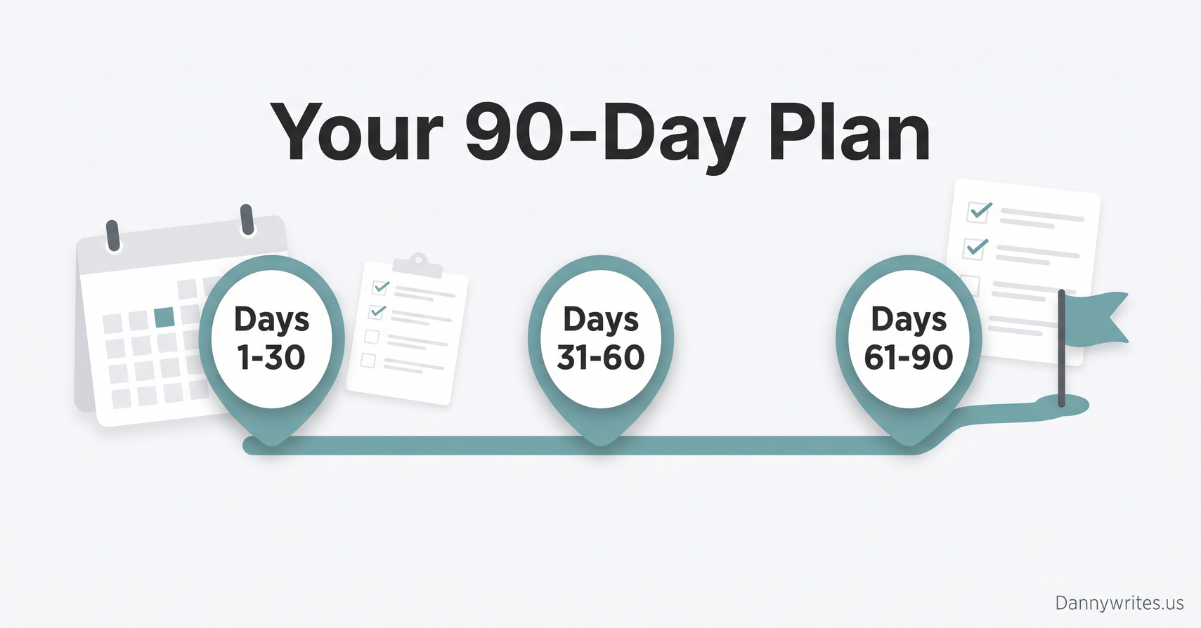
Knowing the models is nice. Doing something with them is the part that pays. Here’s a plan you can start Monday morning.
Days 1–30: Set up the money pages
- Pick your monetization pair: one service and one affiliate category that fit your niche.
- Create a “Work With Me” page and add it to your menu.
- Sign up for a free email tool and create one simple lead magnet.
- Rewrite your top three posts to include a clear next step: a signup form, an affiliate recommendation or a service mention.
- Apply to two or three affiliate programs that pay meaningful commissions.
Days 31–60: Publish for buyers
- Write four buyer-intent posts (comparisons, “best for” lists, honest reviews).
- Turn each post into three to five Pinterest pins.
- Send one helpful email per week to your list, even if it only has 12 people.
- Pitch your service to five potential clients directly, using your blog posts as proof.
Days 61–90: Launch and repurpose
- Build and launch one small digital product priced between $9 and $29.
- Announce it to your list with a short three-email sequence.
- Record one YouTube video based on your best-performing post.
- Review your numbers: which page earned the most per visitor? Write more like it.
The mindset that keeps you going
The biggest risk isn’t low traffic. It’s quitting at month four, right before things start compounding. Most of the small bloggers I know who earn steady income didn’t have a breakthrough moment. They had a boring, repeatable process they stuck with long after it stopped being exciting.
Sponsored Resource
Build the habits behind passive income
Consistency is a skill. This self-help resource focuses on the mindset and success habits that support building passive income over time.
Check it out →Final Thoughts: Small Blog, Real Business
The internet loves big numbers, and that makes it easy to feel invisible with a few hundred monthly visitors. But traffic was never the goal. It’s a means to an end. The real goal is a reader who trusts you enough to buy something, hire you or open your next email.
When you focus on revenue per visitor, every part of your blog changes. You write fewer “fun facts” posts and more “here’s exactly what to buy and why” posts. You build a product instead of waiting for ad networks to accept you. You treat your blog as a portfolio, a store and a home base rather than a lottery ticket. That’s the real way to make money blogging with low traffic: not by waiting to get bigger, but by getting more useful to the readers you already have.
So here’s your one action for today: open your analytics, find your single best post and add one clear next step to it. A product link, a signup form or a “work with me” line. Small change, small blog, real money.
If this guide helped, share it with a blogger friend who’s been staring at their traffic stats a little too long. And if you have a question, leave it in the comments. I read every one.
Frequently Asked Questions
Can you really make money blogging with low traffic?
Yes. Small blogs earn by increasing revenue per visitor instead of chasing pageviews. Buyer-intent affiliate posts, your own digital products, freelance services and an email list can each earn far more per visitor than display ads.
How much traffic do I need to join a premium ad network?
As of November 2026, Journey by Mediavine reportedly accepts sites from about 1,000 monthly sessions, while Raptive asks for around 25,000 monthly pageviews. Requirements change often, so check each network’s site before applying.
What is the fastest way for a small blog to earn its first dollar?
Offering a service usually works fastest. Your blog acts as a portfolio, and a single client can pay more than months of ad revenue. Pair it with one buyer-focused affiliate post and a simple email signup to build longer-term income.
🌿 Weekly wellness, health & beauty insights — straight to your inbox
Free subscription · Cancel anytime