How to Use AI for Freelance Writing Income in 2026: The Complete Playbook
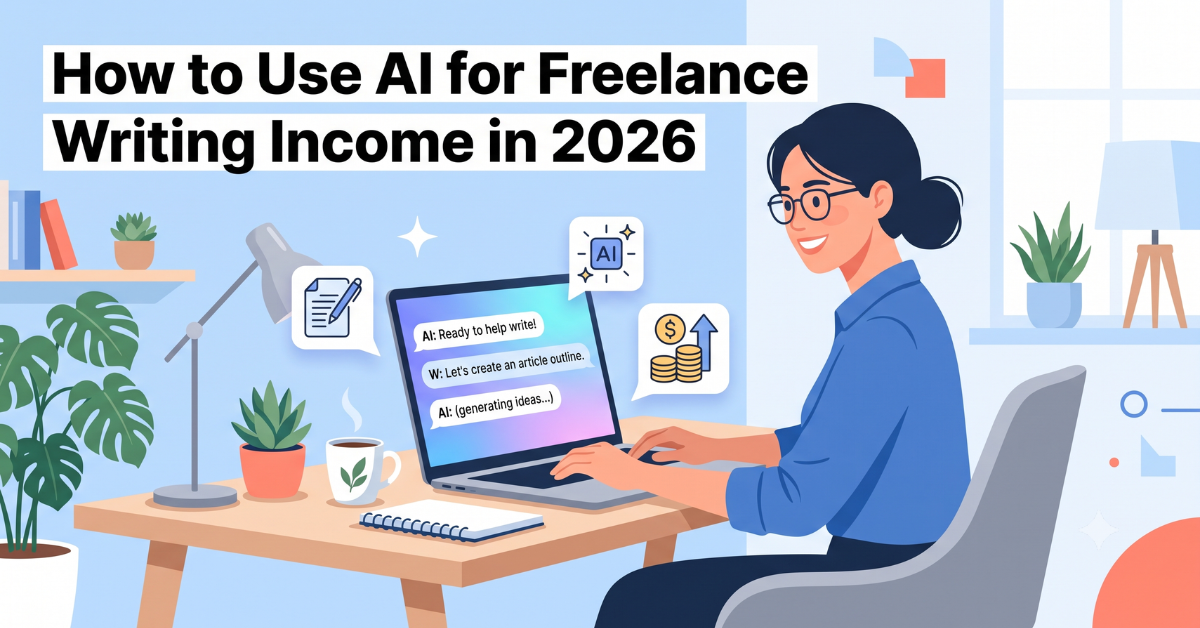
Living in California, I’ve watched a strange shift happen inside my own group of freelance friends over the last eighteen months. The ones who used to dread a blank Google Doc are now the ones quietly picking up two, three, sometimes five new clients a month. Nothing about their talent changed overnight. What changed is that they stopped treating AI as a novelty and started treating it as infrastructure — the same way a contractor treats a power drill instead of a hand screwdriver.
If you’ve been circling the idea of freelance writing as a side income but felt priced out by “real” writers with English degrees and decade-long portfolios, 2026 is arguably the best entry point this industry has ever had. Not because AI writes the content for you — it doesn’t, not well enough to sell on its own — but because AI collapses the time between “I have an idea” and “I have a polished, client-ready draft” from hours down to minutes.
Thinking about going freelance full-time? Thousands of writers are already building side income on platforms built for exactly this.
Start Freelancing on Fiverr →1. Why 2026 Is the Tipping Point for AI-Assisted Freelance Writing
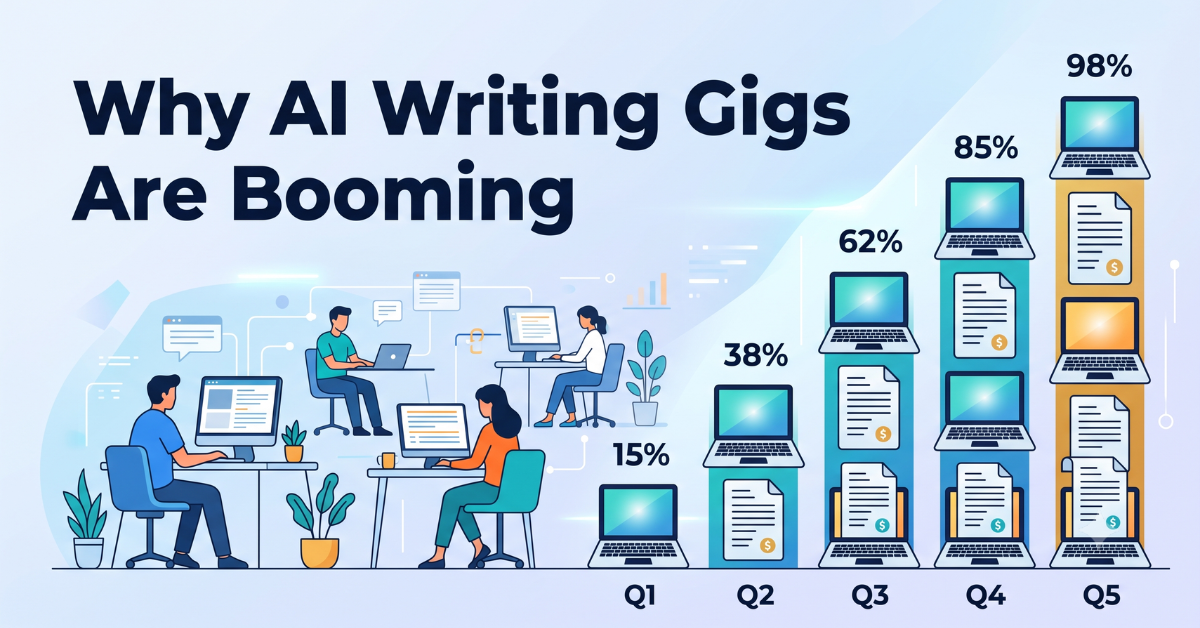
Every small business owner I talk to says roughly the same thing: they know content marketing works, and they know they’re falling behind on it. A local HVAC company in Sacramento doesn’t need a Pulitzer-caliber essayist. They need someone who can turn “we do same-day repairs” into a blog post, three email subject lines, and a set of Instagram captions by Thursday — reliably, every week, without ghosting.
The Content Gap Small Businesses Can’t Fill Alone
Most small and mid-sized companies fall into one of two camps: they either have zero content strategy, or they hired an in-house employee who’s stretched across marketing, customer service, and half of ops. That leaves an enormous, unglamorous middle market — the $30–$150 per-post range — that big agencies won’t touch and full-time writers often consider beneath their rate. It’s exactly where an AI-assisted freelancer can move in, deliver fast, and become indispensable.
- Local service businesses (dentists, gyms, real estate agents) need consistent blog and email content but rarely have a marketing hire.
- E-commerce brands constantly need product descriptions, which are short, repetitive, and perfectly suited to an AI-draft-then-edit workflow.
- Newsletter-driven creators and small SaaS companies need a steady drip of blog posts to feed their SEO funnel.
None of these clients are asking “did AI touch this?” They’re asking “did this arrive on time, is it accurate, and does it sound like us?” That’s the bar you’re actually clearing, and it’s a much lower bar than most beginners assume.
2. The AI Writing Stack That Actually Pays in 2026
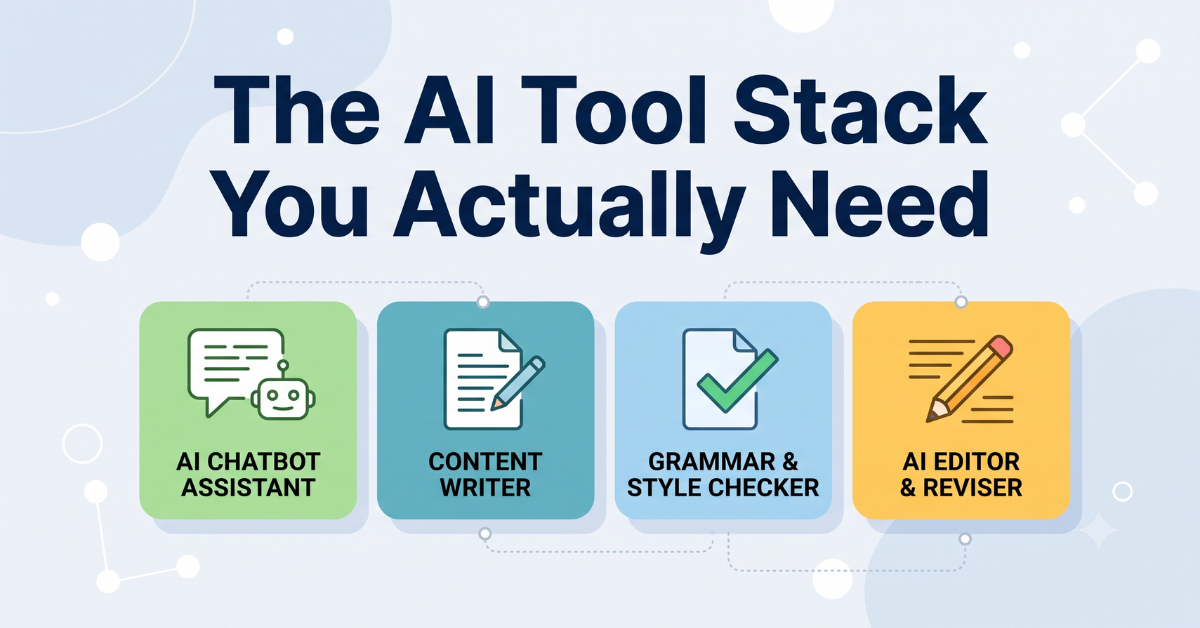
The mistake I see most beginners make is treating “AI writing” as one tool doing one job. In practice, a freelancer who’s actually making money is running a small three-layer pipeline, and each layer uses a different strength of AI.
Layer 1 — Research & Idea Generation
Tools like ChatGPT and Claude are best used here first: pulling together an outline, surfacing angles the client hasn’t thought of, and drafting a rough structure. This is where you save the most time, because outlining from a blank page is usually the slowest part of writing.
Layer 2 — Drafting & Structuring
Once you have an outline, the same AI tools expand it into a full first draft. This draft is intentionally rough — your job in the next step is to make it sound like a human wrote it, not to publish it as-is.
Layer 3 — Polish & Brand-Voice Editing
This is the layer that separates a $15 gig from a $150 gig. You read the AI draft out loud, cut the generic phrasing, add a specific example or a real number, and match the client’s actual tone. Clients pay for this judgment, not for typing speed.
The right software stack makes this three-layer workflow twice as fast. Here’s what serious freelance writers are using in 2026.
See the Best Writing Software →3. How Much Freelance Writers Are Really Earning With AI

Numbers vary a lot by niche, but the pattern I see repeated across freelancer forums and marketplace listings is consistent enough to describe honestly, without inflating it.
Entry Level (Month 1–2)
Expect $15–$40 per blog post or short email sequence on general marketplaces. It feels low, but a beginner who’s dialed in their three-layer workflow can realistically turn around three to five of these a day, which puts a part-time side income within reach fast.
Established Freelancer (Month 3–6)
Once you have three or four repeat clients and a small portfolio, per-post rates commonly move into the $75–$200 range, especially in higher-value niches like finance, SaaS, health, and legal content — industries where accuracy and trust matter and clients will pay a premium for a writer who double-checks the AI draft carefully.
Specialist (Month 6+)
At this stage, some freelancers stop selling by the post entirely and move to monthly retainers — a fixed number of articles per month for a fixed fee, often $800–$2,500 depending on volume and niche. This is where AI-assisted writing starts to look less like gig work and more like a small content agency of one.
Ready to turn this into real income? Freelance marketplaces make it easy to land your first paying client this week.
Create Your Freelancer Profile →4. Step-by-Step: Landing Your First AI-Assisted Writing Client

Step 1 — Pick One Narrow Niche, Not “Writing” in General
“Freelance writer” is too vague to be findable. “I write onboarding emails for SaaS startups” is a business. Pick a niche you can speak about with some real familiarity — even a hobby counts — because it makes your AI-assisted drafts noticeably more specific and harder to spot as generic.
Step 2 — Build a Two-Piece Portfolio Before You Have Clients
Use your AI stack to draft two sample pieces in your chosen niche — a blog post and a short email — then spend real time editing them until they read like something you’d be proud to publish under your own name. This is your proof of skill before anyone has paid you a dollar.
Step 3 — Pitch Where the Buyers Already Are
Marketplaces remove the hardest part of freelancing — finding buyers — because the buyers are already searching. List your niche specifically, price your first few gigs slightly below market to collect reviews fast, and raise your rate every five to ten completed orders.
Step 4 — Price Transparently and Set Expectations Early
Be upfront that AI is part of your process if a client asks — most don’t ask, but the ones who do respect honesty far more than a vague dodge. Frame it accurately: AI speeds up your first draft, but every word is reviewed, fact-checked, and rewritten by you before delivery.
Step 5 — Systemize So You Can Scale Past One Client at a Time
Save your best prompts, build a simple brand-voice checklist per client, and batch similar work together. This is what turns “a gig here and there” into a repeatable, scalable income stream instead of a one-off side hustle.
5. Protecting Your Privacy and Your Clients’ Data as a Remote Writer
Something beginners rarely think about: once you’re handling client documents, drafts, and sometimes confidential product details, you’re also handling risk. Freelancers frequently work from coffee shops, co-working spaces, and airport lounges — all public networks where anyone sharing the connection can potentially intercept unencrypted traffic. A client whose unreleased product details leak because you were logged into a coffee shop Wi-Fi isn’t a client you keep.
Working from public Wi-Fi with client files on your laptop? A VPN encrypts your connection and keeps your client’s data private.
Protect Your Freelance Work with NordVPN →6. The Mistakes That Get AI-Assisted Writers Fired Fast
Publishing the First Draft Without Editing
This is the single most common reason freelancers lose repeat clients. Unedited AI drafts tend to hedge, repeat themselves, and avoid specifics — readers notice, and so do clients.
Claiming Work Is “100% Human-Written” When It Isn’t
If a client explicitly asks for fully human-written copy and you deliver an AI-assisted draft anyway, that’s a trust problem, not a writing problem. Be honest about your process up front and you’ll rarely lose a client over it.
Ignoring Brand Voice Guidelines
AI defaults to a generic, slightly corporate tone unless you actively steer it. Keep a short voice guide per client — three adjectives, two example sentences — and reference it every time you draft.
Your 90-Day Path to AI Freelance Writing Income
None of this requires quitting your job or investing thousands of dollars upfront. It requires picking one niche, building a small three-layer AI workflow, and pitching consistently for a few months while you collect reviews and raise your rates. The freelancers who succeed in 2026 aren’t the ones with the fanciest AI tools — they’re the ones who treat AI as the first draft, and their own judgment as the final one.
Want the exact AI toolkit freelancers are using to build a full-time income in 2026?
Get the Best AI Tools for Writing Income →💡 Frequently Asked Questions (FAQ)
Can I really make consistent money freelance writing with AI in 2026, or is the market already too saturated?
The general freelance writing market is competitive, but the AI-assisted middle tier — $30 to $150 per post for small businesses — remains underserved because most full-time writers consider it too low-value and most beginners don’t know it exists. Niching down narrowly, rather than competing as a generalist, is what keeps this market open.
Do I need to disclose to clients that I’m using AI to draft my writing?
There’s no universal legal requirement, but honesty protects your reputation. If a client asks directly or specifies fully human-written copy in the job listing, disclose your AI-assisted process upfront rather than risk losing their trust later.
What’s the biggest difference between freelancers earning $20 per post and those earning $150 per post?
It’s rarely the tool — it’s the editing layer. Freelancers earning higher rates spend real time rewriting AI drafts into something specific, accurate, and voice-matched to the client, while lower earners publish the AI draft with minimal changes.
🌿 Weekly wellness, health & beauty insights — straight to your inbox
Free subscription · Cancel anytime